
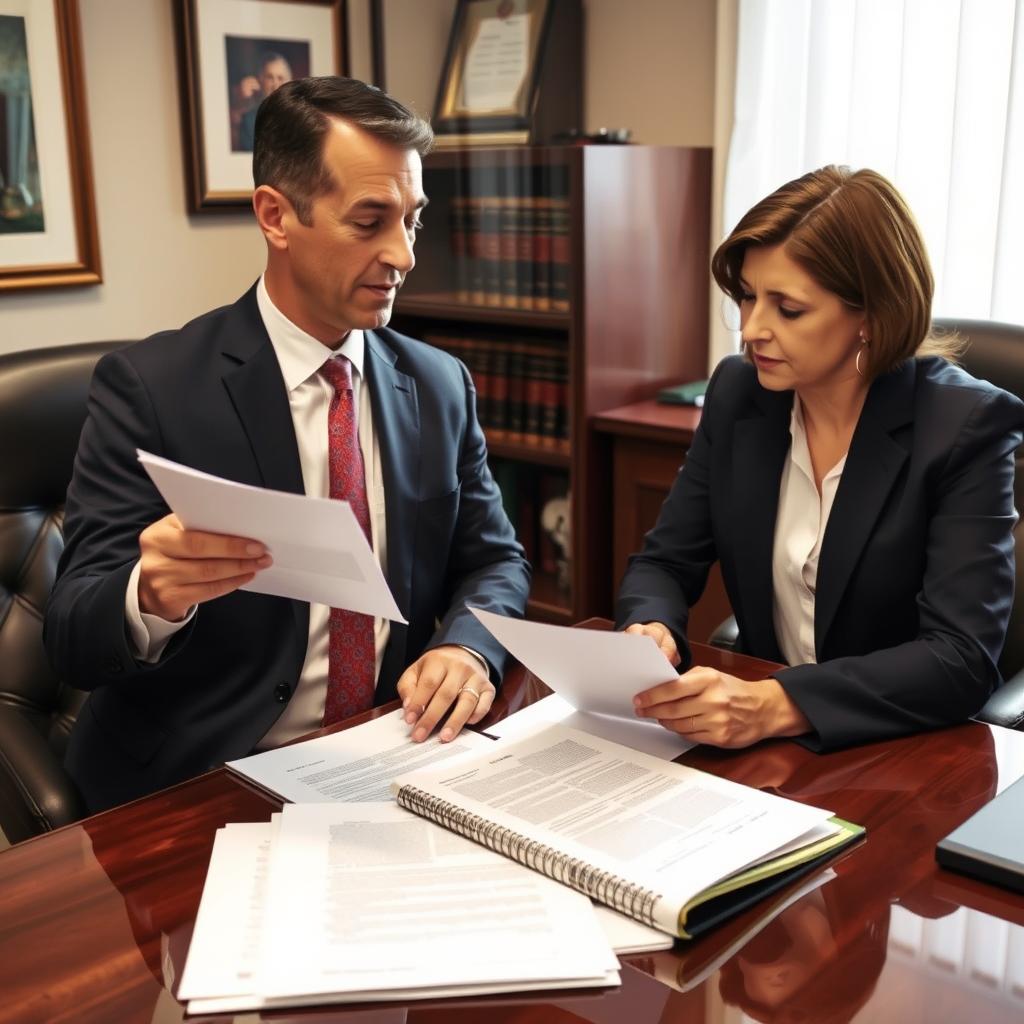
Trial Separation Lawyer Prince William County, VA
If you are considering a trial separation in Prince William County, understanding Virginia’s legal framework is critical. A trial separation is an informal arrangement where spouses live apart without immediately ending the marriage. While Virginia does not have a formal “legal separation” status, the separation period is a mandatory step for no-fault divorce and can profoundly impact property rights, custody, and support. Mr. Sris, Owner and Founder of Law Offices Of SRIS, P.C., has practiced family law since 1997 and assists clients in Prince William County with separation agreements, divorce preparation, and related matters. To discuss your situation, reach our Fairfax location at (888) 437-7747. Law Offices Of SRIS, P.C. – Advocacy Without Borders.
What Is a Trial Separation in Virginia?
Virginia does not recognize “legal separation” as a distinct court decree. Instead, a trial separation is a voluntary period during which spouses live separately, typically to evaluate the marriage or begin negotiating a separation agreement. Under Virginia law, the length of separation can affect the divorce ground invoked. For a no-fault divorce without minor children, the parties must live separate and apart for six months pursuant to a written separation agreement; with minor children, the separation period is one year. The relevant statute, Va. Code § 20‑91(9), establishes the separation requirements that form the foundation for no-fault divorce in Prince William County and across the Commonwealth.
During a trial separation, spouses may address temporary issues such as child custody, visitation, and spousal support by a pendente lite order from the Prince William County Juvenile and Domestic Relations District Court or through a privately negotiated separation agreement. Because the separation must be continuous and without cohabitation, professional guidance helps ensure the arrangement meets statutory requirements when it is time to file a Complaint for divorce in the Prince William County Circuit Court.
How a Prince William County Trial Separation Lawyer Can Help
An experienced family law attorney can draft a separation agreement that resolves property division, custody, child support, and spousal support in a way that complies with Virginia statutes. The Prince William County Circuit Court, located at 9311 Lee Avenue, Suite 230, Manassas, Virginia, has exclusive jurisdiction over divorce actions and equitable distribution. A properly executed separation agreement can convert a contested situation into an uncontested divorce, reducing time, expense, and conflict.
Mr. Sris and his Of Counsel team appear regularly in Prince William County courts and understand local procedural expectations, including corroborating witness requirements for uncontested divorce hearings and the role of mediation. By structuring a trial separation with a clear agreement from the outset, you protect your rights and create a smoother path to a final divorce decree when the time comes.
Frequently Asked Questions
What is the difference between a trial separation and a legal separation in Virginia?
Virginia does not have a legal separation status; a trial separation is a voluntary period of living apart without court involvement. While some states recognize legal separation decrees that divide assets and establish support obligations, Virginia only grants divorce or annulment. Spouses who separate can still enter into a binding separation agreement under Va. Code § 20‑109, which may settle all issues and serve as the foundation for a no‑fault divorce.
Do I need a lawyer for a trial separation in Prince William County?
You are not required to have a lawyer, but an attorney can help you avoid mistakes that complicate a later divorce. A poorly drafted separation agreement may fail to address future contingencies or may be set aside by the court if it is unconscionable or procured through coercion. Mr. Sris and his Of Counsel team review the agreement’s compliance with Virginia equitable distribution law and child‑support guidelines to ensure enforceability.
How does a trial separation affect child custody and support in Virginia?
During a separation, either parent may seek temporary custody and support orders from the Prince William County Juvenile and Domestic Relations District Court. The court applies the ten best‑interest factors in Va. Code § 20‑124.3 to determine custody and uses the Virginia child support guidelines to calculate support. A separation agreement can establish parenting time and support arrangements, but the court will always review custody and support provisions to verify they protect the child’s welfare.
Can a trial separation be used as grounds for divorce in Prince William County?
Yes, a period of separation is the primary no‑fault ground for divorce in Virginia. If the parties have lived separate and apart without cohabitation for one year, or for six months when no minor children are involved and a separation agreement is in place, the court may grant a divorce on no‑fault grounds. The separation must be continuous, and the Complaint must verify the parties have met the statutory separation period before the final hearing.
What should be included in a Virginia separation agreement?
A comprehensive separation agreement typically addresses property classification and division, spousal support, child custody and visitation, child support, and allocation of debts. It may also cover insurance, tax filing, and use of the marital residence. The agreement must be in writing and signed by both parties to be enforceable under Va. Code § 20‑109, and it becomes a binding contract that the court may incorporate into a final divorce decree.
Will a trial separation automatically lead to divorce in Prince William County?
No, a trial separation does not automatically result in divorce; one spouse must file a Complaint in the Circuit Court. The separation is merely a factual prerequisite for no‑fault divorce. If the parties reconcile and resume cohabitation, the separation clock resets. If they choose to divorce, the separation period already completed may satisfy the statutory requirement, provided no cohabitation occurred.
How long must I live in Virginia before I can file for divorce based on separation?
At least one party must be a bona fide resident and domiciliary of Virginia for six months before filing. The statutory residency requirement under Va. Code § 20‑97 applies regardless of where the marriage occurred. The six‑month period must immediately precede the commencement of the suit, and the court will require evidence of domiciliary intent, such as driver’s license, voter registration, or employment in Prince William County.
Can a separation agreement be modified once it is signed?
A separation agreement may be modified if both parties agree in writing, or if a court finds grounds to modify specific provisions after a divorce. Property division is generally final, but provisions for child support and custody may be modified based on a material change in circumstances, subject to the best interests of the child. Spousal support modification depends on the terms of the agreement and statutory factors.
Does Virginia require mediation before a divorce based on separation?
Mediation is not mandatory in Virginia divorce cases, but the Prince William County courts encourage alternative dispute resolution. The court may order the parties to attend a mediation orientation session in contested custody or visitation matters. Mediation can be an effective way to resolve disagreements about the separation agreement, parenting plan, or support issues without the expense of litigation.
What is the role of a corroborating witness in an uncontested divorce hearing?
Virginia requires at least one corroborating witness to testify at the final divorce hearing when proceeding on no‑fault grounds. The witness must verify that the parties have lived separate and apart for the required period. The witness is typically a friend, family member, or neighbor who has personal knowledge of the separation. An attorney can prepare the witness and handle the court presentation smoothly.
How can I protect my financial interests during a trial separation?
Executing a written separation agreement with legally enforceable terms is the strongest protection for financial interests during separation. The agreement can freeze the date of separation for property classification, prohibit dissipation of marital assets, and establish temporary support. Without an agreement, property acquired after separation may still be classified as marital if it results from marital effort, potentially complicating equitable distribution.
About Mr. Sris and His Of Counsel Team
Mr. Sris, Owner and Founder of Law Offices Of SRIS, P.C., has practiced family law since 1997. A former prosecutor, he brings a disciplined litigation perspective to separation, divorce, and custody matters. Mr. Sris and his Of Counsel team appear in Prince William County Circuit Court, General District Court, and Juvenile and Domestic Relations District Court, advising clients on separation agreements, equitable distribution, spousal support, and child‑related issues. The firm serves families in Manassas, Woodbridge, Dale City, Dumfries, Gainesville, Haymarket, Lake Ridge, Occoquan, and throughout Northern Virginia.
For other Northern Virginia communities, you may also review: Family Law Lawyer Fairfax County, Family Law Lawyer Stafford County, Family Law Lawyer Loudoun County, Family Law Lawyer Arlington County, and Family Law Lawyer Fauquier County.
For authoritative Virginia legal resources, consult Virginia Code Title 20 (Domestic Relations) and the Virginia Judicial System.
Attorney advertising. Prior results do not guarantee a similar outcome.
Case results depend on a variety of factors unique to each case.