
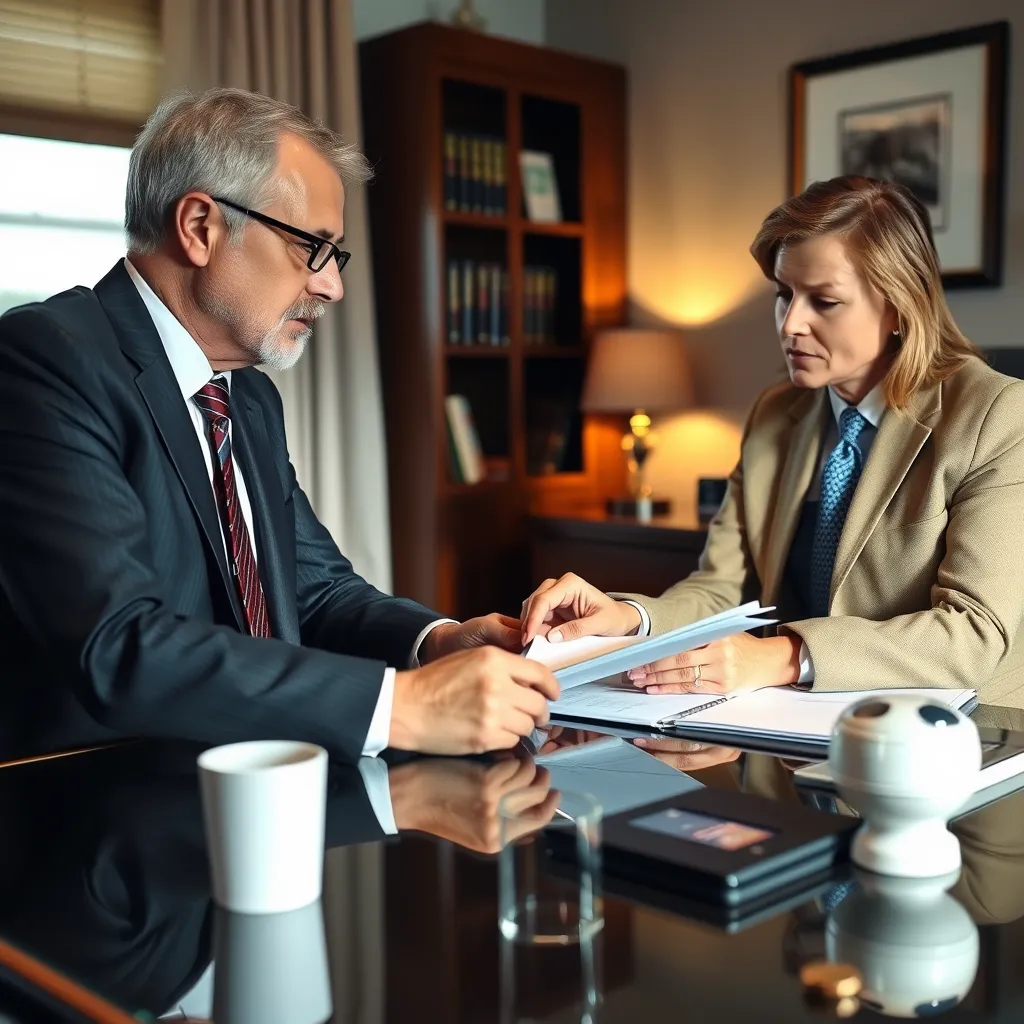
Property Settlement Lawyer Falls Church, VA
Property settlement in Falls Church, Virginia, is a central part of a divorce that requires careful handling of marital assets, debts, and financial arrangements. Whether you are working out a separation agreement, negotiating the division of a family business, or addressing retirement accounts under Virginia’s equitable distribution laws, having an experienced attorney can help protect your interests. Law Offices Of SRIS, P.C. represents clients in property settlement matters throughout the City of Falls Church, including proceedings at the Falls Church Circuit Court, located at 300 Park Avenue, Suite 151W. Mr. Sris and the firm’s Of Counsel attorneys work with individuals to identify marital property, evaluate settlement proposals, and prepare separation agreements that meet Virginia’s statutory requirements. To discuss your property settlement matter, reach our Fairfax Location at (888) 437-7747 to schedule a consultation. Law Offices Of SRIS, P.C. – Advocacy Without Borders.
What Property Settlement Means in Falls Church, Virginia
A property settlement in Falls Church is the process by which a divorcing couple, either by negotiation or court decision, divides their marital assets and debts. Virginia is an equitable distribution state, not a community property state. That means property is divided fairly, but not necessarily equally. Under Va. Code § 20‑107.3, the court classifies property as marital, separate, or part‑marital/part‑separate, values each item, and then distributes marital property after considering multiple statutory factors. These factors include each spouse’s contributions to the acquisition and care of marital property, the duration of the marriage, the ages and health of the parties, and the circumstances that led to the dissolution. The goal is a division that is equitable, not a strict 50‑50 split.
Property settlement cases that involve a divorce are heard in the Falls Church Circuit Court. Standalone custody, visitation, and child support matters are heard in the Falls Church Juvenile and Domestic Relations District Court. A written property settlement agreement, often part of a broader separation agreement, can resolve all property issues without a trial if both parties sign and the court finds it fair. in handling family law matters in Falls Church, we routinely work with clients who need help addressing real estate, retirement plans, business interests, and stock options. Law Offices Of SRIS, P.C., through its Fairfax Location at 4008 Williamsburg Court, Fairfax, Virginia, provides representation to individuals throughout Falls Church. Contact us to review your financial circumstances and to discuss how equitable distribution factors apply to your situation.
How Mr. Sris and the Firm’s Of Counsel Attorneys Handle Property Settlement Cases
Mr. Sris and the firm’s Of Counsel attorneys approach each property settlement matter by first understanding the full financial picture. We work with clients to gather documentation of all assets and debts, identify what is marital versus separate property, and then prepare a strategy for negotiation or, if needed, litigation. In many cases, we help clients draft a separation agreement that resolves property division, spousal support, and related issues. When the parties cannot agree, the matter proceeds to the Falls Church Circuit Court, where the judge applies the equitable distribution factors under Va. Code § 20‑107.3 after hearing evidence.
Because every case is different, we do not promise specific timelines or outcomes. Uncontested property settlements typically move faster than those requiring a trial. Complex estates that include closely held businesses, international assets, or large retirement accounts often benefit from forensic accounting analysis and careful valuation. Our role is to explain the law, protect your financial rights, and work toward a resolution that is fair under Virginia’s equitable distribution framework. To discuss how we can assist with your Falls Church property settlement, reach Law Offices Of SRIS, P.C. at (888) 437-7747.
About Mr. Sris and the Firm’s Of Counsel Attorneys
Mr. Sris is the Owner and Founder of Law Offices Of SRIS, P.C. He is a former prosecutor who founded the firm in 1997 and is admitted to practice in Virginia, Maryland, the District of Columbia, New Jersey, and New York. Mr. Sris testified before the Virginia House Courts of Justice Committee in support of 2019 HB 635 (chief patron Del. David Bulova), a bill that revised the equitable distribution statute, Va. Code § 20‑107.3(g). His firsthand understanding of trial procedure and statutory interpretation supports the firm’s family law practice.
Mr. Sris and the firm’s Of Counsel attorneys bring extensive combined legal experience. Results may vary. The Of Counsel attorneys who handle family law matters include practitioners with backgrounds in criminal prosecution, law enforcement, and complex civil litigation, all of which contribute to a thorough approach to property settlement cases. When you need assistance with a property settlement in Falls Church, you can reach Mr. Sris and the firm’s Of Counsel attorneys at (888) 437-7747.
Frequently Asked Questions
What is a property settlement agreement in Virginia?
A property settlement agreement is a written contract that resolves how marital property, debts, and sometimes spousal support will be handled after a divorce. Under Va. Code § 20‑109, the agreement may be incorporated into the final divorce decree. It typically covers real estate, bank accounts, retirement plans, vehicles, and personal property. If both parties sign voluntarily and the court finds it fair, the agreement can be enforced without a trial. Our firm drafts and reviews settlement agreements for clients in Falls Church to ensure they accurately reflect the agreed‑upon division.
How is marital property divided in Falls Church, Virginia?
Marital property is divided under Virginia’s equitable distribution system, not a strict 50‑50 split. The Falls Church Circuit Court follows Va. Code § 20‑107.3 and considers factors such as each spouse’s contributions, the length of the marriage, and the reasons for the divorce. Separate property—owned before the marriage or received as a gift or inheritance—is generally not subject to division. The court can order the sale of property or award one spouse a monetary sum to balance the distribution.
Do I need a lawyer for a property settlement in Falls Church?
While you are not legally required to have an attorney, property settlement involves legal and financial issues that can affect you for years. An attorney can help you identify marital property, negotiate a fair agreement, and ensure compliance with Virginia law. Without legal guidance, you may overlook assets or agree to terms that are disadvantageous. Our firm offers consultations to review your situation and answer questions about the process.
What is the difference between a separation agreement and a property settlement agreement?
A separation agreement may cover all divorce‑related issues—property, support, custody—while a property settlement agreement typically focuses on the division of assets and debts. In Virginia, a separation agreement that resolves property division can serve as the property settlement if it fully addresses those matters. Both types of agreements can be filed with the Falls Church Circuit Court as part of a divorce proceeding. Our firm assists with drafting and negotiating both kinds of agreements.
How long does a property settlement case take in Falls Church?
The time needed for a property settlement depends on whether the parties agree, the complexity of the marital estate, and the court’s calendar. Uncontested matters where both sides cooperate and sign a written agreement can be concluded relatively quickly. Contested property division, especially when business valuations or expert testimony is required, takes longer. Our firm works to move your case forward efficiently while protecting your interests.
How do I start the property settlement process in Falls Church?
Start by gathering a complete list of your assets, debts, income, and expenses, then contact an attorney. Law Offices Of SRIS, P.C. provides consultations to review your situation, explain Virginia’s equitable distribution law, and outline next steps. You can reach our Fairfax Location at (888) 437-7747 to schedule a time to discuss your matter.
Related Family Law Pages
Family law in Fairfax County |
Family law in Fairfax City |
Family law in Prince William County |
Family law in Manassas City |
Family law in Manassas Park
Official Virginia Resources
Virginia Code § 20‑107.3 – Equitable distribution
Falls Church Circuit Court
Virginia’s Judicial System
Attorney advertising. Prior results do not guarantee a similar outcome. Results may vary.
Case results depend on a variety of factors unique to each case.