
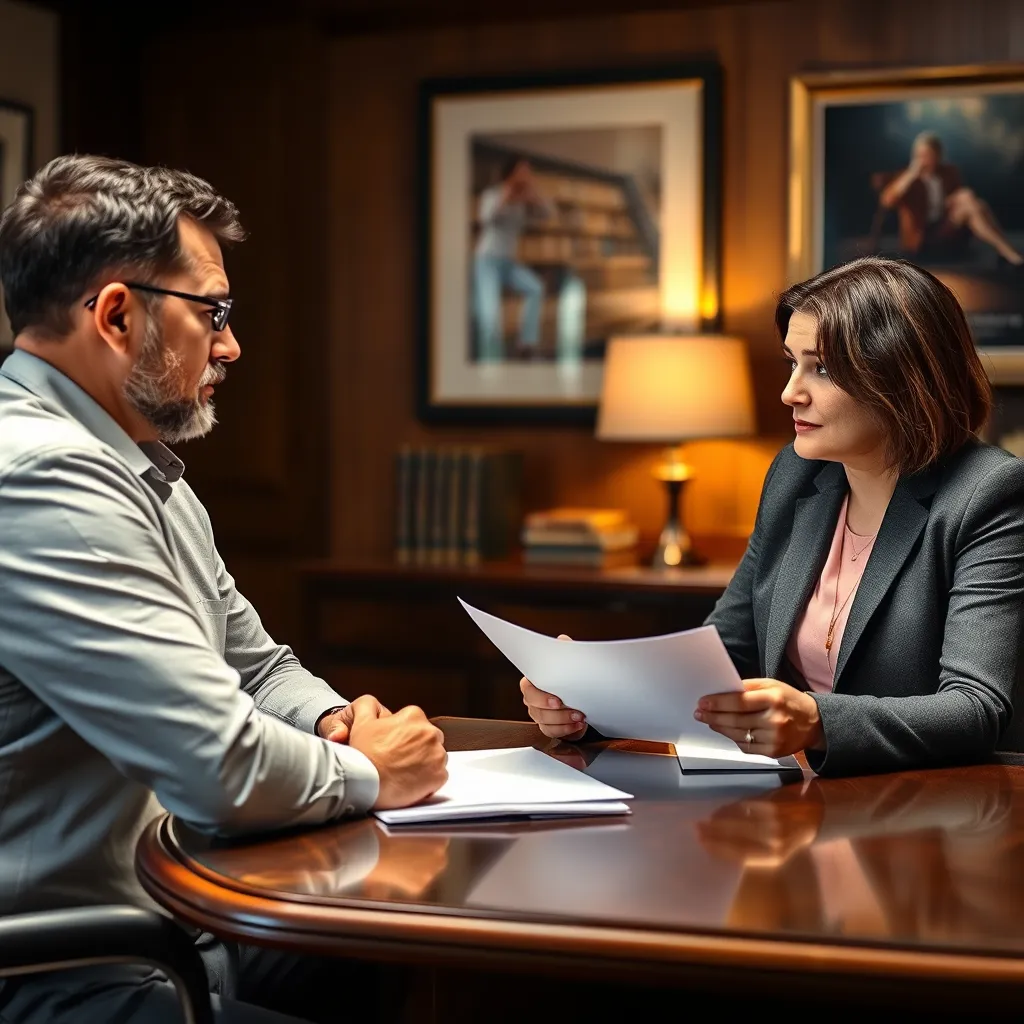
Cruelty Divorce Lawyer Falls Church, VA
In Virginia, cruelty is a fault ground for divorce under Va. Code § 20-91. A spouse seeking a divorce on cruelty grounds must prove that the other spouse’s conduct caused a reasonable apprehension of bodily hurt, or that the conduct seriously affected their physical or mental health. For Falls Church residents, these petitions are filed in the Falls Church Circuit Court, which has exclusive jurisdiction over divorce matters in the city. The court sits at 300 Park Avenue, Suite 151W, Falls Church, VA 22046. Proving cruelty can have significant implications for equitable distribution of marital property under Va. Code § 20-107.3, as well as for spousal support and custody. This is why thorough preparation and a clear presentation of the evidence are essential. Mr. Sris, Owner and Founder of Law Offices Of SRIS, P.C., and his Of Counsel team have extensive experience in contested family law matters, including cruelty-based divorces, in Falls Church and throughout Northern Virginia. To discuss your case and explore your legal options, contact Law Offices Of SRIS, P.C. at (888) 437-7747. Law Offices Of SRIS, P.C. – Advocacy Without Borders.
What Cruelty Divorce Means in Falls Church, Virginia
Under Virginia law, a divorce from the bond of matrimony may be granted on the ground of cruelty or reasonable apprehension of bodily hurt (Va. Code § 20-91). Unlike no-fault divorce, which requires a separation period of one year or six months with an agreement when no minor children are involved, a cruelty divorce does not require a waiting period once the fault ground is proven. Virginia courts have interpreted cruelty to include physical violence, threats, and mental cruelty that makes continuing the marriage unsafe or intolerable. The complaining spouse must present clear and convincing evidence, often through testimony and corroborating witnesses, to establish that the other spouse’s conduct created a risk of harm. A finding of cruelty can influence the division of marital property—potentially granting a larger share to the injured spouse—and can support a claim for spousal support.
In Falls Church, cruelty divorce cases are filed in the Falls Church Circuit Court at 300 Park Avenue. The court is one of the smallest and most efficient circuit courts in Virginia, serving the approximately 14,000 residents of the independent city. Family law proceedings in this courthouse are generally handled with the same procedural rules as in neighboring Fairfax County, but the smaller docket can sometimes allow for more direct court interaction. Mr. Sris and his Of Counsel are familiar with the local procedures, court schedules, and preferences of the Falls Church bench. This local experience allows them to present cruelty divorce cases effectively and to guide clients through each stage of the process, from filing the complaint to presenting testimony at trial.
How Mr. Sris and His Of Counsel Handle Cruelty Divorce Cases
When you engage Law Offices Of SRIS, P.C. for a cruelty-based divorce, you work with Mr. Sris, a former prosecutor who understands how to build a case from evidence. The process begins with a detailed consultation where the facts of the marriage and the alleged cruelty are reviewed in depth. The legal team identifies what proof will be needed: photographs, medical records, police reports, and testimony from witnesses who observed the harmful behavior. Because cruelty cases are often contested, Mr. Sris and his Of Counsel prepare each case as if it will go to trial, even while exploring settlement options. Their approach is thorough and client-centered, focusing on protecting the client’s safety, financial interests, and parental rights.
Through discovery, they request documents and take depositions to solidify the evidence picture. They work with mental health professionals when appropriate to demonstrate the impact of cruelty. Negotiations may lead to a property settlement agreement that avoids a public trial, but if the case does proceed, the firm’s trial experience in the Falls Church Circuit Court and other Northern Virginia courts is substantial. Mr. Sris and his Of Counsel have handled a wide range of family law matters, including high-conflict divorces, and they bring that experience to every cruelty case. Results may vary. Contact Law Offices Of SRIS, P.C. at (888) 437-7747 to discuss how the firm can assist with your cruelty divorce matter.
About Mr. Sris and His Of Counsel Team
Mr. Sris is the Owner and Founder of Law Offices Of SRIS, P.C. He established the firm in 1997 and has practiced family law throughout Virginia ever since. As a former prosecutor, he brings a trial-focused perspective to divorce litigation, understanding how to present evidence, question witnesses, and frame arguments persuasively before a judge. He is admitted to practice in Virginia, Maryland, the District of Columbia, New Jersey, and New York. Mr. Sris testified before the Virginia House Courts of Justice Committee in support of 2019 HB 635 (chief patron Del. David Bulova), a bill that revised the equitable distribution statute, reflecting his deep engagement with family law legislation. This legislative background enhances his ability to counsel clients on complex property division issues that often arise in fault-based divorces.
Supporting Mr. Sris is a team of Of Counsel attorneys engaged through Excella. These attorneys bring diverse backgrounds to the firm—including former prosecutors, a former Virginia State Trooper, and practitioners with decades of courtroom experience. Mr. Sris and his Of Counsel bring extensive combined legal experience to every cruelty divorce matter. Results may vary. By working together, they ensure that each client’s case receives thorough attention and that multiple perspectives inform the strategy. To learn more about how the team can help with your Falls Church cruelty divorce, contact Law Offices Of SRIS, P.C. at (888) 437-7747.
Frequently Asked Questions
How does a Virginia lawyer prove cruelty in a divorce?
A Virginia lawyer proves cruelty by presenting clear evidence that the spouse’s conduct caused reasonable apprehension of bodily hurt or seriously endangered mental health. This evidence can include medical records, photographs of injuries, police reports, threatening messages, and testimony from witnesses who saw the abuse or its effects. In mental cruelty cases, the attorney may work with a mental health professional to document emotional harm. The evidence must show more than ordinary marital discord; it must demonstrate a pattern of behavior that makes living together unsafe or intolerable. Mr. Sris and his Of Counsel at Law Offices Of SRIS, P.C. Evaluate all available proof and build a compelling case for the court in Falls Church.
What should I do if I am considering filing for a cruelty divorce in Falls Church?
If you are considering a cruelty divorce in Falls Church, the first step is to consult with an experienced family law attorney to review the facts and understand your legal options. You should gather any relevant documents—medical records, correspondence, financial records—that may support your case. It is also important to prioritize your safety; if you are in immediate danger, contact law enforcement. An attorney can advise you on whether a protective order may be appropriate and how to prepare for the divorce process. Once you engage counsel, they will file a complaint in the Falls Church Circuit Court and begin building the evidence needed to prove cruelty.
How long does a cruelty divorce take in Falls Church, Virginia?
Unlike a no-fault divorce, a cruelty divorce does not require a mandatory separation period, so the case can proceed as soon as the evidence is ready, with many contested divorces resolving within 9 to 18 months in Falls Church. The actual timeline depends on the complexity of the evidence, the availability of the court, and whether the parties reach a settlement. Some cases may resolve faster if both sides agree on property and support issues; others that go to trial can take longer. Mr. Sris and his Of Counsel work to move cases forward efficiently while ensuring thorough preparation. For a more specific timeline, contact Law Offices Of SRIS, P.C. at (888) 437-7747.
Does cruelty affect property division in a Virginia divorce?
Yes, a finding of cruelty can significantly influence property division in Virginia, as courts may award a greater share of marital assets to the spouse who was the victim of cruelty. Under Virginia’s equitable distribution law (Va. Code § 20-107.3), the court considers factors such as the circumstances that contributed to the dissolution of the marriage. If one spouse’s cruelty caused the breakdown, the judge may distribute assets unequally to compensate the injured spouse. Additionally, spousal support awards can be higher in fault-based divorces. Mr. Sris and his Of Counsel present the cruelty evidence to demonstrate its financial and emotional impact, seeking a fair outcome for the client.
Is a cruelty divorce more complex than a no-fault divorce in Falls Church?
A cruelty divorce is generally more complex and contentious than a no-fault divorce because it requires proving fault, which can involve extensive evidence gathering, witness testimony, and a contested trial. No-fault divorces are often resolved by written separation agreements and uncontested submissions. In a cruelty case, the parties are frequently in dispute, and the emotional stakes are higher. However, an experienced attorney can help manage the complexity by building a strong case and, where possible, working toward a negotiated resolution that avoids a full trial. Mr. Sris and his Of Counsel have handled many such high-conflict divorces in the Falls Church Circuit Court and can guide you through the process.
How much does a cruelty divorce cost in Falls Church?
The cost of a cruelty divorce in Falls Church varies depending on whether the case settles or goes to trial, the amount of discovery required, and the involvement of attorneys. Initial filing fees in Virginia are set by statute, but attorney’s fees are typically charged by the hour and depend on the complexity of the matter. Contested cruelty cases often require more attorney time than uncontested divorces. During a consultation, the attorney can provide a general estimate based on the specifics of your situation. To discuss potential costs and scheduling, contact Law Offices Of SRIS, P.C. at (888) 437-7747.
Serving nearby communities: Fairfax County family law, Fairfax City divorce lawyer, Prince William County divorce, Manassas custody and support, Manassas Park family law.
Primary source references: Virginia Code Title 20 (Domestic Relations), Falls Church Circuit Court.
Attorney advertising. Prior results do not guarantee a similar outcome. Results may vary.
Case results depend on a variety of factors unique to each case.