
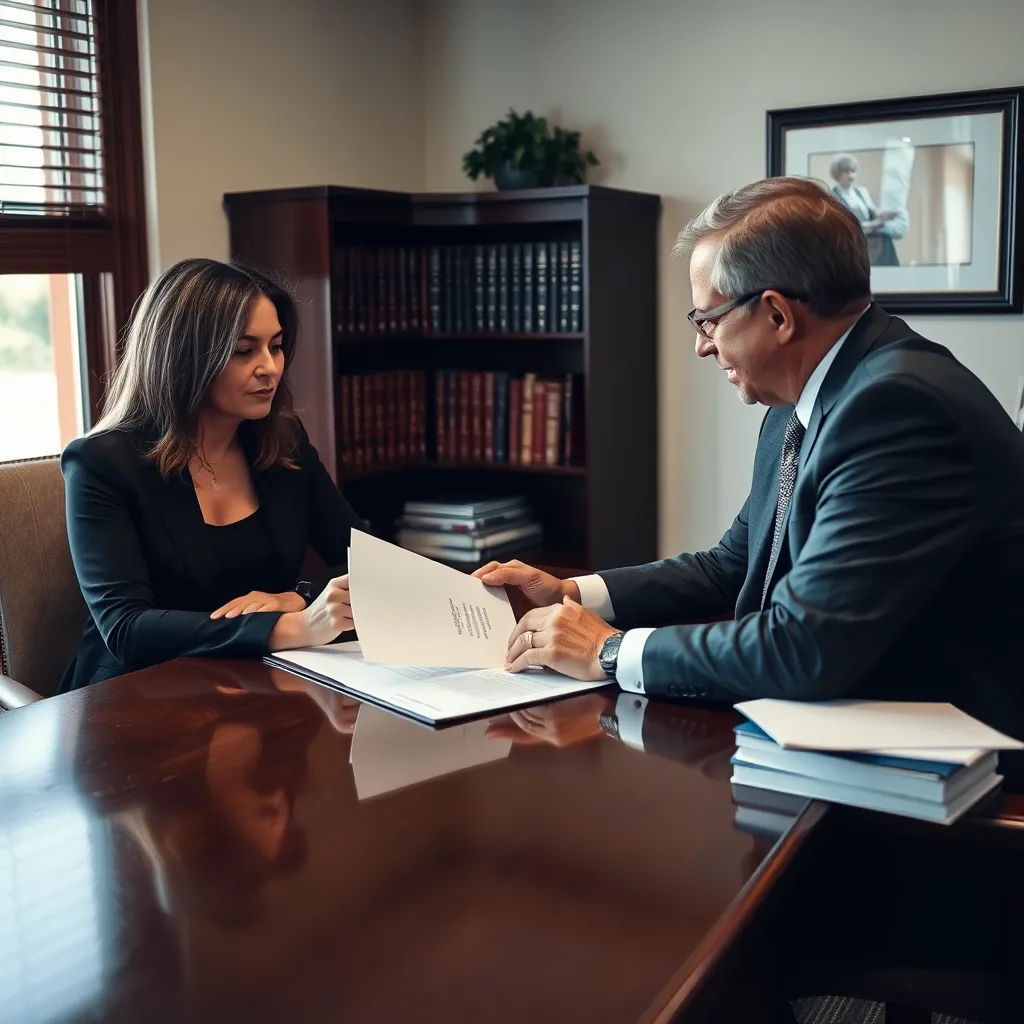
Annulment Lawyer Fairfax, VA
An annulment is a legal decree that a marriage was never valid from the start. Unlike a divorce—which ends a valid marriage—an annulment treats the union as though it never legally existed. In Fairfax, Virginia, annulment proceedings are governed by Va. Code § 20‑89.1 and are heard in the Fairfax County Circuit Court or the Fairfax City Circuit Court, depending on where the parties reside. Law Offices Of SRIS, P.C. helps individuals navigate the annulment process in Fairfax. Mr. Sris, the firm’s Owner and Founder, is a former prosecutor who has practiced family law across Virginia since 1997. He and the firm’s Of Counsel attorneys handle annulment cases throughout the Fairfax area, including Burke, Centreville, McLean, Vienna, and all surrounding communities. To request a consultation about an annulment matter, reach our Fairfax location at (888) 437‑7747. Law Offices Of SRIS, P.C. – Advocacy Without Borders.
What an Annulment Means in Fairfax, Virginia
Virginia law treats annulment differently than divorce. While a divorce dissolves a valid marriage, an annulment declares that no marriage ever existed under the law. In Fairfax, proceedings are filed in the Circuit Court—either the Fairfax County Circuit Court (4110 Chain Bridge Road, Fairfax, VA 22030) or the Fairfax City Circuit Court (10455 Armstrong Street, Fairfax, VA 22030). The firm’s Fairfax location works with clients in both courts.
The grounds for annulment in Virginia are limited. Under Va. Code § 20‑89.1, a marriage may be annulled if it was void or voidable at its inception. Grounds include bigamy, impotence that was unknown at the time of marriage, underage marriage without proper consent, fraud, duress, mental incapacity, or a marriage procured by force. The court examines the specific facts of each case and determines whether the marriage meets the statutory criteria for annulment. A party requesting an annulment must also satisfy the same six‑month residency requirement that applies to divorce (Va. Code § 20‑97). Both the petitioner and the respondent must have been domiciled in Virginia for at least six months before filing.
Annulment cases in Fairfax are handled in the same Circuit Court that hears divorces. The court has the authority to address related matters such as custody, visitation, property division, and support in connection with the annulment decree. Law Offices Of SRIS, P.C. assists clients with all aspects of annulment litigation in Fairfax, from preparing and filing the complaint to presenting evidence at the final hearing.
How Mr. Sris and the Firm’s Of Counsel Attorneys Handle Annulment Cases in Fairfax
When a client contacts Law Offices Of SRIS, P.C. about an annulment, the firm begins by evaluating whether the marriage meets Virginia’s statutory grounds. Not every short‑term or unhappy marriage qualifies for annulment. Mr. Sris and the firm’s Of Counsel attorneys review the circumstances—including how the marriage was entered into and any facts that may support a claim of fraud, duress, or incapacity—and advise the client on whether an annulment is the appropriate legal remedy.
If annulment is appropriate, the firm drafts and files a complaint in the correct Fairfax Circuit Court. The complaint sets out the specific ground for annulment and the facts supporting it. The court will set a hearing date based on its calendar, and the parties will have the opportunity to present evidence. Because annulments often involve sensitive personal and financial matters, the firm works to protect the client’s interests throughout the proceeding. In some situations, the parties may reach an agreement on related issues such as property division or spousal support, which the court can incorporate into the final annulment decree.
Mr. Sris and the firm’s Of Counsel attorneys bring extensive combined legal experience to every annulment case. The firm’s familiarity with the Fairfax County and Fairfax City courts helps clients understand what to expect at each stage of the process. Results may vary.
About Mr. Sris and the Firm’s Of Counsel Attorneys
Mr. Sris, Owner and Founder of Law Offices Of SRIS, P.C., has practiced family law in Virginia since the firm opened in 1997. He is admitted to the bars of Virginia, Maryland, the District of Columbia, New Jersey, and New York. A former prosecutor, Mr. Sris brings firsthand understanding of the Virginia court system to every family law case he handles. In addition to his practice, Mr. Sris testified before the Virginia House Courts of Justice Committee in support of 2019 HB 635 (chief patron Del. David Bulova).
Working alongside Mr. Sris are the firm’s Of Counsel attorneys—independent practitioners who contract directly with Law Offices Of SRIS, P.C. and offer additional experience in family law, litigation, and related areas. Together, Mr. Sris and the firm’s Of Counsel attorneys provide thorough, multi‑state representation to clients in Fairfax and across Northern Virginia. To speak with Mr. Sris or an Of Counsel attorney about an annulment matter, call (888) 437‑7747.
Frequently Asked Questions About Annulments in Fairfax, VA
What is the difference between annulment and divorce in Virginia?
An annulment declares that a marriage was never valid, while a divorce ends a marriage that was valid at its inception. In Virginia, annulment is available only when specific legal grounds make the marriage void or voidable from the start—such as bigamy, fraud, or mental incapacity. Divorce, on the other hand, may be obtained on no‑fault grounds after a period of separation or on fault grounds such as adultery or cruelty. Both proceedings are filed in the Circuit Court, and the court can address custody, support, and property issues in either type of case. Whether an annulment is the right option depends on the unique facts of the marriage.
What are the grounds for annulment in Virginia under Va. Code § 20‑89.1?
Virginia law permits annulment for marriages that are void or voidable, including those entered into while one spouse was still legally married, marriages involving certain types of fraud or duress, marriages where a party lacked capacity to consent, and marriages that were prohibited by law. Specifically, the grounds include bigamy, impotence unknown at the time of marriage, underage marriage without proper consent, fraud going to the essence of the marriage, mental incapacity, and marriages procured by force. An experienced family law attorney can review your situation and determine whether the circumstances fit one of these statutory grounds.
Do I need a lawyer for an annulment in Fairfax?
You are not legally required to hire a lawyer, but an annulment involves strict statutory requirements and court procedures that can be difficult to navigate alone. The petitioner must prove the specific ground for annulment, file the complaint in the correct Circuit Court, and present evidence at a hearing. Since the outcome affects marital status, property rights, and potentially custody, having representation helps protect your interests. Mr. Sris and the firm’s Of Counsel attorneys handle annulment cases in Fairfax and can guide you through each stage of the process.
How does the annulment process work in Fairfax County and Fairfax City?
An annulment begins by filing a complaint in the Circuit Court of the county or city where either party resides. After the complaint is served on the other spouse, the court schedules a hearing. At the hearing, the party seeking the annulment must present evidence supporting the ground for annulment—such as testimony, documents, or other proof. The judge then decides whether the marriage meets the statutory criteria for annulment. If the court grants the annulment, it may also issue orders regarding property division, spousal support, and child custody. The timeline for an annulment varies based on the court’s calendar and the complexity of the case.
Can I get an annulment if I have children with my spouse?
Yes, children do not prevent an annulment, but the court will address custody and support as part of the proceeding. Even though an annulment treats the marriage as if it never existed, children born during the marriage are considered legitimate under Virginia law. The Circuit Court has the authority to decide custody, visitation, and child support using the same best‑interest‑of‑the‑child standard that applies in divorce cases. Reaching Law Offices Of SRIS, P.C. Early can help you understand how the annulment will affect your parenting arrangements.
For guidance on your specific situation, reach our Fairfax location at (888) 437‑7747.
Related pages:
Fairfax County Family Law Attorney |
Falls Church Family Law Attorney |
Prince William County Family Law Attorney
Official Virginia resources:
Va. Code § 20‑89.1 (Annulment) |
Virginia Judicial System |
Va. Code § 20‑97 (Residency for Divorce/Annulment)
Attorney advertising. Prior results do not guarantee a similar outcome.
Results may vary.
Case results depend on a variety of factors unique to each case.