
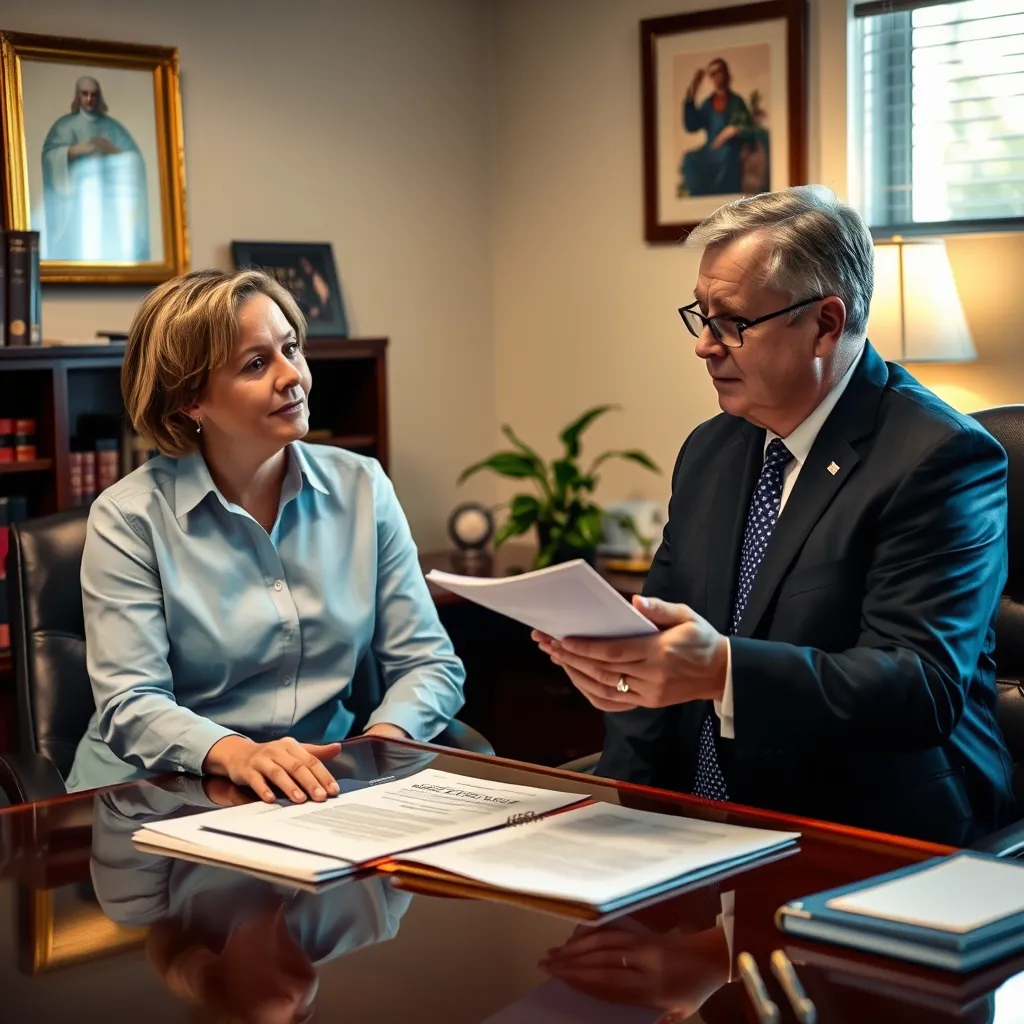
Catholic Annulment Lawyer Fairfax, VA
You received a civil divorce years ago and believed that chapter was closed. Now, you wish to remarry in the Catholic Church, only to learn that the Church requires a declaration of nullity—a Catholic annulment—and that Virginia law may still need a civil annulment to address property or status issues from the prior marriage. You need a lawyer who respects the unique interplay between canon law and Virginia’s statutory annulment process. Law Offices Of SRIS, P.C. – Advocacy Without Borders.
Strategy Options
Law Offices Of SRIS, P.C. Concentrates on helping clients in Fairfax County and surrounding Northern Virginia communities obtain civil annulments under Va. Code § 20‑89.1. Mr. Sris and his Of Counsel recognize that many people pursuing a Catholic annulment also need a parallel civil decree to resolve residual legal questions—remarriage eligibility, property division, and the cessation of spousal support obligations. The firm’s approach is to map out the civil annulment path while you pursue the ecclesiastical process, so that your legal standing is secure at every stage.
Because the Virginia courts require specific factual grounds, the firm carefully evaluates the circumstances of the marriage: whether fraud, duress, incapacity, or another statutory ground applies. Mr. Sris and his Of Counsel then prepare the complaint, marshal supporting evidence, and present the matter to the Fairfax County Circuit Court. While litigation may be necessary if the other party contests the annulment, many cases resolve without a contested hearing when the facts are clearly documented.
What To Expect
The civil annulment process in Virginia starts with filing a Complaint for Annulment in the circuit court where at least one party resides. Because Fairfax is an independent city sharing the Nineteenth Judicial District with Fairfax County, cases can be filed in either the Fairfax County Circuit Court or the Fairfax City Circuit Court depending on where you live. The court will schedule a hearing after the complaint is served on the other spouse.
During the hearing, the judge considers whether the evidence meets the standard for one of the limited annulment grounds under Va. Code § 20‑89.1. Unlike a divorce, which dissolves a valid marriage, an annulment declares that no valid marriage ever existed. If the court grants the annulment, the marriage is treated as void from the beginning. This can affect property rights and support obligations, so it is important to have counsel who can present the factual record persuasively.
Legal Standards for Annulment in Virginia
Virginia law permits a civil annulment only in narrow circumstances. The petition must demonstrate one of the following statutory grounds:
- One party was under the legal age of consent.
- One party lacked the mental capacity to consent.
- The marriage was procured by fraud or duress.
- One party was permanently impotent at the time of marriage, hiding that fact from the other spouse.
- The marriage is bigamous because a prior spouse was still living and the prior marriage had not been dissolved.
- The marriage is prohibited due to relationship within prohibited degrees of kinship.
Courts do not grant annulments simply because the parties no longer wish to be married. The statutory grounds must be proven. The firm’s experience in family law litigation helps clients determine whether their situation fits one of these categories and how best to present the evidence.
Attorney Credentials
Mr. Sris, Owner and Founder of Law Offices Of SRIS, P.C., is a former prosecutor who has practiced law since 1997. He is admitted in Virginia, Maryland, the District of Columbia, New Jersey, and New York. His experience in court proceedings and his background in statutory interpretation inform the firm’s handling of annulment cases. Mr. Sris testified before the Virginia House Courts of Justice Committee in support of 2019 HB 635 (chief patron Del. David Bulova), a bill that revised provisions of Virginia’s equitable distribution statute.
Mr. Sris and his Of Counsel bring extensive combined legal experience to family law matters. The firm’s attorneys are familiar with the procedures of the Fairfax County Circuit Court and the Fairfax City Circuit Court, and they work to guide clients through the annulment process while remaining sensitive to the religious and personal dimensions involved in seeking a Catholic annulment.
Frequently Asked Questions
What is the difference between a civil annulment and a Catholic annulment?
A civil annulment is a legal decree issued by a state court declaring that no valid marriage existed; a Catholic annulment is a religious declaration by a Church tribunal that a sacramental marriage was never present. The two processes are independent, but a person who receives a Catholic annulment may still need a civil annulment to address legal matters such as property division or remarriage under state law. Each proceeding has its own rules and standards of proof.
Do I need a civil annulment in Virginia if I already have a Catholic annulment?
Possibly yes if you have unresolved legal rights from the prior civil marriage. A Catholic annulment does not automatically void a state marriage license. If you own property jointly, have support obligations, or intend to remarry in Virginia, a civil annulment—or in some cases a divorce—may be necessary to clarify your legal status. Consult with an attorney to evaluate your specific circumstances.
What are the grounds for an annulment in Fairfax, Virginia?
Virginia recognizes annulment for underage marriage, mental incapacity, fraud, duress, permanent impotence undisclosed to the other spouse, bigamy, or prohibited kinship. These statutory grounds are set out in Va. Code § 20‑89.1. The court requires clear evidence; merely regretting the marriage is not sufficient.
How long does an annulment take in Fairfax County?
The timeline varies depending on whether the other spouse contests the case and on the court’s schedule. An uncontested annulment where the facts are documented and the other party does not oppose the petition may resolve more quickly than a contested matter that requires a full hearing. The firm can discuss realistic expectations during a consultation.
Can I get an annulment instead of a divorce in Virginia?
Only if your marriage falls within one of the statutory annulment grounds. Many marriages that end are dissolved by divorce, not annulment, because the marriage was validly entered. If your situation meets the criteria—for example, fraud or bigamy—you may pursue an annulment. Otherwise, a no‑fault or fault‑based divorce is the appropriate remedy.
Do I need a lawyer for a civil annulment in Fairfax?
You are not required to hire a lawyer, but the legal standards for annulment are strict and the procedural requirements can be complex. An attorney can assess whether you have viable grounds, prepare the necessary pleadings, gather supporting evidence, and represent you at any court hearing. The firm offers consultations to help you understand your options before you decide how to proceed.
How does the firm handle the intersection of canon law and Virginia law?
The firm focuses on the civil side of annulment—the Virginia court proceeding—while respecting that the Catholic annulment is a separate canonical process. Mr. Sris and his Of Counsel are experienced in family law and can coordinate with the ecclesiastical process as needed, understanding that the two systems operate under different rules and timelines.
What should I bring to a consultation about an annulment?
Bring your marriage certificate, any prior divorce decree, and any documentation related to the grounds you believe apply—such as emails, medical records, or evidence of fraud. The attorney will also ask about the facts surrounding the marriage ceremony, your residence history, and whether there are minor children or property to address. Having these materials ready helps the consultation be more productive.
For guidance on your specific situation, reach Law Offices Of SRIS, P.C. at (888) 437‑7747.
For a detailed statutory breakdown of Virginia annulment law, see our comprehensive analysis.
Additional resources: Virginia Code Title 20 (Domestic Relations) and Fairfax County Circuit Court.
Law Offices Of SRIS, P.C., Fairfax Location, 4008 Williamsburg Court, Fairfax, VA 22032. By appointment. Call (888) 437‑7747.
Attorney advertising. Prior results do not guarantee a similar outcome. Results may vary.
Case results depend on a variety of factors unique to each case.