
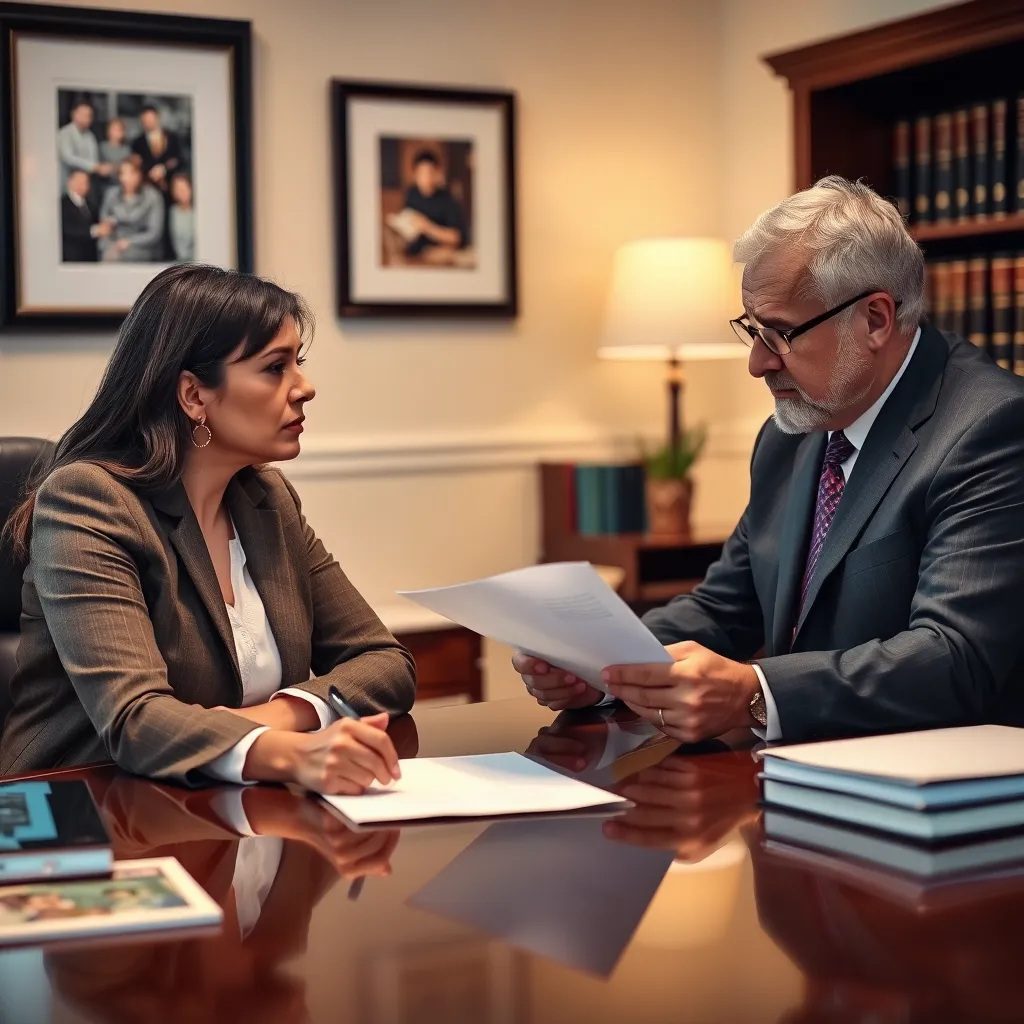
Postnup Lawyer Fairfax, VA
A postnuptial agreement allows married couples in Fairfax, Virginia, to establish clear financial guidelines without pursuing divorce. Whether you wish to protect a family business, define spousal support expectations, or address separate property that came into the marriage after the wedding, a properly drafted postnup can provide certainty and reduce conflict. Unlike a prenuptial agreement signed before marriage, a postnup is executed after the couple has already exchanged vows and often after financial circumstances have changed significantly. Fairfax County, with its concentration of dual‑income families, government employees, and military personnel, frequently sees couples who need to update their financial plans without ending the marriage. Mr. Sris, Owner and Founder of Law Offices Of SRIS, P.C., and the firm’s Of Counsel attorneys assist clients throughout Fairfax County and the City of Fairfax with drafting, reviewing, and enforcing postnuptial agreements under Virginia’s Premarital Agreement Act. Our Fairfax location, available by appointment only, serves individuals from Burke, Chantilly, McLean, Vienna, Reston, and the surrounding Northern Virginia communities. To request a consultation, call (888) 437‑7747. Law Offices Of SRIS, P.C. – Advocacy Without Borders.
What Postnuptial Agreements Mean in Fairfax, Virginia
In Virginia, postnuptial agreements are governed by the Premarital Agreement Act (Va. Code § 20‑147 et seq.). The same statutory framework that applies to prenuptial agreements also controls postnuptial contracts. This means a valid postnup must be in writing, signed by both spouses, and entered into voluntarily with a fair and reasonable disclosure of each party’s financial situation, or with a knowing waiver of that disclosure. If a dispute arises—such as one spouse later claiming the agreement was signed under duress or that it is unconscionable—the matter is typically heard in the Fairfax County Circuit Court, which has jurisdiction over enforcement and interpretation of marital agreements. The court will examine whether the agreement was executed freely, whether both sides had an opportunity to consult independent counsel, and whether enforcing the contract would result in an inequitable outcome at the time of enforcement.
Fairfax’s diverse population and high‑asset households make postnuptial planning particularly relevant. Spouses who own businesses, receive inheritances, or have retirement accounts that grew substantially after the marriage often use a postnup to clarify what is separate property and what is marital. The agreement can also address spousal support—setting a formula or waiving alimony entirely—though any provision that completely strips a spouse of support in a way that would leave that person dependent on public assistance at the time of enforcement may not be upheld. Because Virginia is an equitable‑distribution state rather than a community‑property state, a postnup can override the default statutory scheme and create a predetermined division of assets and debts. The Fairfax County Circuit Court and, where support or custody issues are intertwined, the Fairfax County Juvenile and Domestic Relations Court are the venues where postnup‑related disputes are litigated. Understanding the local court practices and the expectations of the judges who hear these cases is an important part of effective representation; our attorneys draw on their familiarity with Fairfax County courtrooms to build a record that supports the agreement’s validity.
How Mr. Sris and the Firm’s Of Counsel Attorneys Handle Postnuptial Agreement Cases
When a client meets with Mr. Sris and the firm’s Of Counsel attorneys, the process begins with a detailed discussion of the client’s goals, the couple’s financial picture, and any existing marital‑agreement history. The attorneys gather information about assets, debts, income, and any separate property that either spouse wants to protect. From there, they work with the client to identify the key provisions the agreement should contain—such as property classification, division of retirement accounts, spousal support terms, and the disposition of a family business. Once the substantive terms are settled, the firm prepares a draft that complies with Virginia’s statutory requirements and that is written in plain language to reduce the chance of later misunderstanding. The client reviews the draft, and the firm encourages—though cannot require—that the other spouse have the opportunity to consult with independent counsel before signing. This step helps strengthen the enforceability of the final agreement by demonstrating that both parties entered into it voluntarily and with full understanding.
After both spouses have had an adequate opportunity for review, the agreement is finalized and executed. The firm retains a copy and advises clients on how to store the original safely. If a dispute later emerges—such as a challenge to the agreement’s validity during divorce proceedings—Mr. Sris and the firm’s Of Counsel attorneys represent the client’s interests before the Fairfax County Circuit Court. The litigation strategy focuses on the procedural and substantive safeguards that were followed when the agreement was created, including documentation of financial disclosures and evidence that each party had a realistic opportunity to obtain legal advice. Because Virginia postnuptial agreements are contracts, the same principles that govern contract law—such as the absence of fraud, duress, and unconscionability—apply. The firm’s approach is to build a record from the first consultation that anticipates these potential challenges, so that if enforcement becomes necessary, the client is in the strong $1.
About Mr. Sris and the Firm’s Of Counsel Attorneys
Mr. Sris is the Owner and Founder of Law Offices Of SRIS, P.C., which he established in 1997. A former prosecutor, Mr. Sris brings a depth of courtroom experience to family law matters, including postnuptial agreement negotiation and enforcement. He is admitted to practice in Virginia, Maryland, the District of Columbia, New Jersey, and New York, which allows the firm to assist clients whose financial interests may cross state lines. Mr. Sris concentrates his practice on complex family law issues and works collaboratively with the firm’s Of Counsel attorneys to address each client’s specific legal needs. He has testified before the Virginia House Courts of Justice Committee in support of 2019 HB 635 (chief patron Del. David Bulova).
The firm’s Of Counsel attorneys include practitioners with extensive backgrounds in family law, civil litigation, and criminal defense. This collective experience enables the team to anticipate how a postnuptial agreement might be scrutinized in the context of a later divorce or support proceeding. Because every attorney who works on a client’s matter is Of Counsel to the firm—not an associate or partner—each client benefits from the focused attention of experienced legal professionals. The Fairfax location is available by appointment only, and consultations can be scheduled by calling (888) 437‑7747. Results in any legal matter depend on the specific facts and cannot be past results do not guarantee a similar outcome; prior outcomes do not assure a similar result in your case.
Frequently Asked Questions
What is a postnuptial agreement in Virginia?
A postnuptial agreement is a written contract between spouses, signed after marriage, that defines how property, debts, and support will be handled if the marriage ends. In Virginia, postnuptial agreements are governed by the same Premarital Agreement Act (Va. Code § 20‑147 et seq.) that applies to prenuptial agreements. The agreement can address division of real estate, retirement accounts, business interests, and other assets, as well as spousal support obligations. To be enforceable, the contract must be entered into voluntarily and must include a fair and reasonable disclosure of each party’s financial circumstances, or a written waiver of that disclosure. Because the agreement is a contract, general principles of contract law—such as the requirement that both sides understand what they are signing—also apply.
Are postnuptial agreements enforceable in Fairfax, Virginia?
Yes, postnuptial agreements are enforceable in Fairfax, Virginia, provided they meet the statutory requirements of the Premarital Agreement Act. The Fairfax County Circuit Court has jurisdiction to hear disputes about the validity of a postnup. The court will examine whether the agreement was signed voluntarily, whether both parties received adequate financial disclosure, and whether enforcing the agreement would be unconscionable at the time of enforcement. If the court finds that one spouse was pressured, hid assets, or that the terms are so one‑sided as to shock the conscience, the agreement—or a specific provision—may be set aside. Working with an attorney who understands the local court’s expectations can help ensure that the agreement withstands later scrutiny.
Can a postnuptial agreement be challenged in Virginia?
A postnuptial agreement can be challenged if one spouse can show it was signed involuntarily, based on incomplete financial disclosure, or that it is unconscionable. Challenges typically arise during divorce proceedings when a spouse alleges duress, fraud, or a fundamental misunderstanding of the agreement’s effect. The burden of proof rests on the spouse seeking to invalidate the agreement. Virginia courts will consider the circumstances surrounding execution—whether both parties had the opportunity to consult with independent counsel, whether there was adequate time to review the document, and whether the financial disclosures were materially accurate. When the agreement is drafted and executed with careful attention to these safeguards, the likelihood of a successful challenge is significantly reduced. An attorney can advise on steps to strengthen the agreement’s enforceability from the outset.
Do I need a lawyer to draft a postnuptial agreement in Fairfax?
While Virginia law does not require you to have a lawyer to create a postnuptial agreement, retaining one is strongly advisable. A lawyer can help ensure that the agreement complies with the Premarital Agreement Act, that all necessary financial disclosures are made, and that the language accurately reflects your intentions. If both spouses have separate legal counsel, the court is more likely to find that the agreement was entered into voluntarily and with full understanding. Even if one spouse chooses not to retain a lawyer, the other spouse’s attorney can still draft the agreement and advise their client on its implications. A well‑prepared postnup prepared with legal guidance is far more likely to be upheld if challenged later.
What is the difference between a prenuptial agreement and a postnuptial agreement?
The primary difference is timing: a prenuptial agreement is signed before marriage, while a postnuptial agreement is signed after the wedding has taken place. Aside from that distinction, both types of agreements are governed by the same Virginia statute and require the same basic formalities—writing, signatures, voluntariness, and fair financial disclosure. Prenuptial agreements are often used to protect assets brought into the marriage, whereas postnuptial agreements are typically used when financial circumstances have changed, such as when one spouse starts a business after the wedding or receives a large inheritance. Some couples also use a postnup to resolve ongoing disagreements about money without divorcing, thereby creating a clear financial roadmap for the remainder of the marriage.
How long does it take to create a postnuptial agreement in Fairfax?
The timeline for completing a postnuptial agreement varies depending on the complexity of the couple’s finances and the level of cooperation between the spouses. Simple agreements involving straightforward assets can often be drafted and signed in a matter of weeks. More complex situations—such as those involving business valuations, multiple real estate holdings, or detailed retirement account divisions—may require additional time to gather documentation and negotiate terms. The process also depends on whether both spouses obtain independent legal review, which can add a period of time but typically strengthens the agreement’s enforceability. Your attorney can give you a realistic estimate once the scope of your property and goals is understood. To request a consultation, call (888) 437‑7747.
Explore related family law services in Northern Virginia: Family Law Lawyer in Fairfax County, Family Law Lawyer in Falls Church, Family Law Lawyer in Prince William County, and Divorce Lawyer in Fairfax.
For authoritative information on Virginia postnuptial agreements, consult the Virginia Code Title 20 and the Virginia Judicial System.
Attorney advertising. Prior results do not guarantee a similar outcome. Results may vary.
Case results depend on a variety of factors unique to each case.