
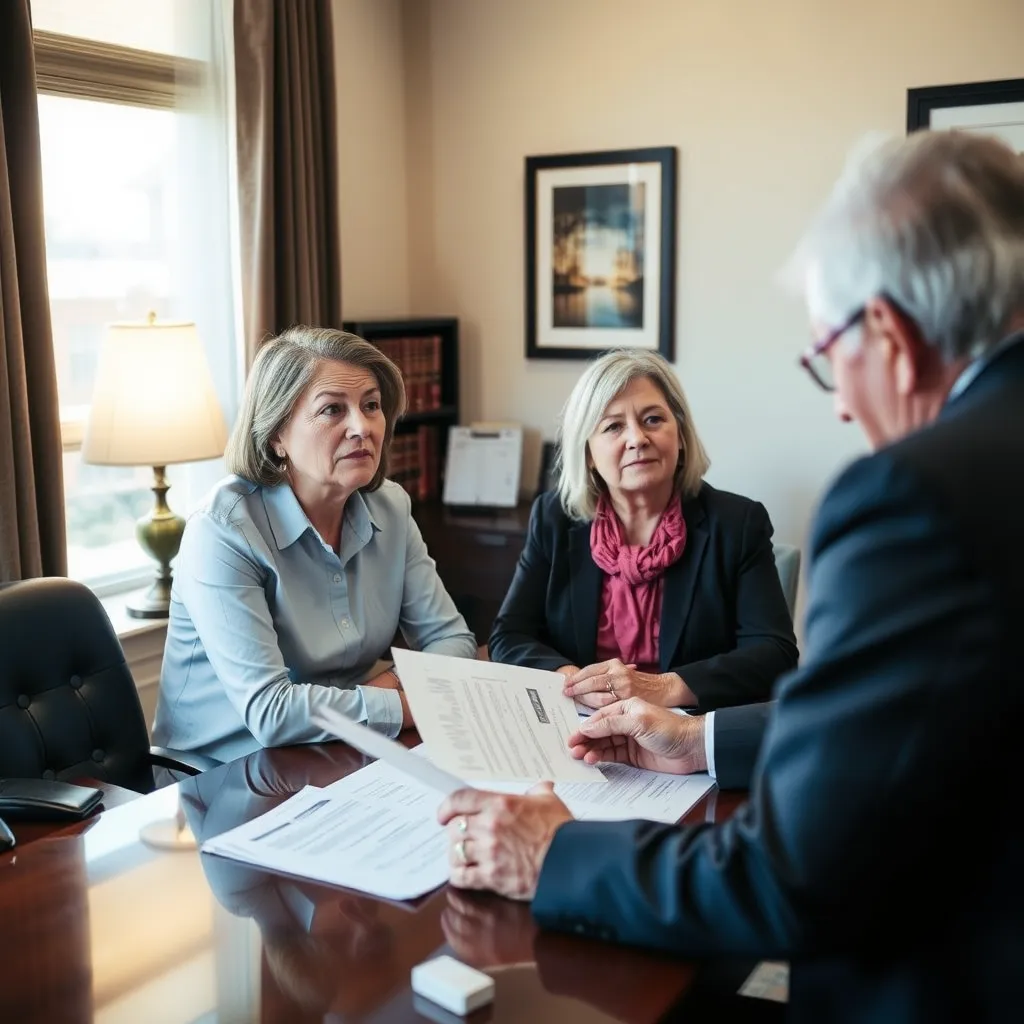
Relative Adoption Lawyer Alexandria, VA
Relative adoption allows a child to be legally adopted by a close family member — a grandparent, aunt, uncle, adult sibling, or other qualifying relative — creating a permanent parent-child relationship without the necessity of placement through an agency. For Alexandria families, this process offers a meaningful way to provide stability and legal security for a child already within the family network. The proceeding is heard in the Alexandria Circuit Court, which has jurisdiction over adoption matters under Virginia law. While relative adoptions are often more streamlined than agency adoptions, Virginia still requires careful compliance with statutory procedures, including consent requirements, background evaluations, and a finalization hearing before the court. Mr. Sris and the firm’s Of Counsel attorneys at Law Offices Of SRIS, P.C. represent families throughout the Alexandria area in relative adoption cases, guiding them through each step to help ensure the process moves forward as smoothly as possible. To request a consultation about a relative adoption matter in Alexandria, call (888) 437-7747. Law Offices Of SRIS, P.C. – Advocacy Without Borders.
What Relative Adoption Means in Alexandria, Virginia
Alexandria, an independent city in Northern Virginia’s 18th Judicial District, handles adoption proceedings through the Alexandria Circuit Court at 520 King Street. Relative adoption cases are governed by Virginia Code Title 63.2, Chapter 12, which sets out the requirements for adoption by a relative of the child. Because Alexandria combines urban density with tight-knit neighborhoods like Old Town, Del Ray, and Kingstowne, many relative adoptions involve extended families who have lived in the area for generations — grandparents stepping in to raise grandchildren, aunts and uncles formalizing their caregiving role, or adult siblings taking legal responsibility for younger brothers and sisters.
The court’s primary concern in any adoption, including a relative adoption, is the best interests of the child. Virginia law permits certain procedural accommodations for relative adoptions, such as possible waiver of the six-month post-placement supervision period or a streamlined home study requirement, when the court finds that the child’s welfare is served. However, prospective adoptive parents still must file a petition, obtain required consents from the birth parents or demonstrate that consent is not required under the statute, and complete any necessary background checks. The Alexandria Circuit Court judge reviews the petition, any reports from the local department of social services or a licensed child-placing agency, and any other evidence to determine whether the adoption should be granted. Because each case is fact-specific, working with an experienced adoption attorney can help Alexandria families navigate the statutory requirements and present a complete record to the court.
How Mr. Sris and the Firm’s Of Counsel Attorneys Handle Relative Adoption Cases
At Law Offices Of SRIS, P.C., relative adoption matters are handled with attention to both the legal and personal dimensions of forming a new parent-child relationship. Mr. Sris and the firm’s Of Counsel attorneys begin by evaluating the family situation — identifying the relative relationship, confirming that the necessary consents have been obtained or that grounds exist to proceed without consent, and determining whether any interstate or international issues apply. The next step is preparing and filing the petition for adoption in the Alexandria Circuit Court, along with supporting documentation such as the child’s birth certificate, any prior custody orders, and the required consent forms.
A critical aspect of relative adoption is the home study, which Virginia law may allow to be waived or conducted in a less intensive form when the petitioner is a close relative. Even when a home study is required, the firm helps families understand what the social worker or agency will be reviewing and coordinates with the evaluator to keep the process moving. Once all reports are complete, a finalization hearing is scheduled. At the hearing, Mr. Sris or one of the firm’s Of Counsel attorneys presents the case to the judge, addresses any questions the court may have, and advocates for entry of the final order of adoption. Throughout the process, the goal is to help the family achieve a legally secure adoption that safeguards the child’s long-term interests.
About Mr. Sris and the Firm’s Of Counsel Attorneys
Mr. Sris, Owner and Founder of Law Offices Of SRIS, P.C., has practiced law since 1997 and is admitted in Virginia, Maryland, the District of Columbia, New Jersey, and New York. His background as a former prosecutor informs his approach to litigation and his understanding of courtroom dynamics. Mr. Sris testified before the Virginia House Courts of Justice Committee in support of 2019 HB 635 (chief patron Del. David Bulova), legislation that revised Virginia’s equitable distribution statute — reflecting his engagement with Virginia family law at the statutory level.
The firm’s Of Counsel attorneys bring additional depth across family law, including adoption matters. Mr. Sris and the firm’s Of Counsel attorneys bring extensive combined legal experience to relative adoption cases in Alexandria and throughout Northern Virginia. Results may vary. All attorneys work collaboratively to provide clients with guidance that is grounded in a thorough knowledge of Virginia’s adoption statutes and local court practices.
Frequently Asked Questions
What is a relative adoption in Virginia?
A relative adoption is a legal process in which a child is adopted by a close family member, such as a grandparent, aunt, uncle, or adult sibling, creating a permanent parent-child relationship under Virginia law. The proceeding is governed by Va. Code § 63.2-1200 et seq., which provides the statutory framework for adoption by a relative. Unlike agency adoptions, relative adoptions may be eligible for certain procedural accommodations — for example, the court may waive the six-month post-placement supervision period or streamline the home study requirement when the petitioner is a qualifying relative. The adoption must still be approved by the circuit court after a review of the petition, consents, and any necessary reports.
How does a relative adoption differ from a non-relative adoption in Alexandria?
The primary difference is that Virginia law treats relative adoptions as a distinct category and may allow certain procedural flexibilities not available in non-relative adoptions. For instance, the home study requirement can sometimes be waived or modified for a close relative, whereas a non-relative adoption typically requires a full home study and a six-month post-placement supervision period. Additionally, the consent requirements and notice provisions may be less burdensome when the child is being adopted by a relative who already has a substantial relationship with the child. The Alexandria Circuit Court evaluates each petition individually, giving weight to the existing family bond.
Do I need a lawyer for a relative adoption in Alexandria, Virginia?
Virginia law does not require a lawyer to file a relative adoption petition, but working with an attorney can help ensure that all statutory requirements are met and that the adoption is finalized without unnecessary delay. Adoption law involves detailed procedural rules, consent provisions, and sometimes complexities like terminating the parental rights of a birth parent who cannot be located or who contests the adoption. An attorney familiar with the Alexandria Circuit Court can prepare the petition, coordinate with social services, and represent the family at the finalization hearing. Law Offices Of SRIS, P.C. represents families in relative adoption matters in Alexandria; call (888) 437-7747 to request a consultation.
What is the general process for a relative adoption in Alexandria?
The process typically begins with filing a petition for adoption in the Alexandria Circuit Court, along with the required consents from the birth parents or proof that consent is not required, followed by any necessary background checks and a home study, if applicable, and concludes with a finalization hearing before the judge. After filing, the court may order an investigation by the local department of social services or a licensed child-placing agency. If the petitioner is a close relative, the court has discretion to waive or modify some of these steps. Once all reports are received and the court is satisfied that the adoption is in the child’s best interests, a final order of adoption is entered, establishing the legal parent-child relationship.
What are the benefits of completing a relative adoption?
Completing a relative adoption gives the child and the adoptive parent all the legal rights and responsibilities of a biological parent-child relationship, including inheritance rights, eligibility for health insurance coverage through the adoptive parent, and the ability to make medical and educational decisions. It also provides long-term stability for the child by creating a permanent family unit. For the adoptive relative, the adoption order eliminates legal uncertainty that may exist when the child is in informal care. In Alexandria, a finalized adoption also means the child’s birth certificate is amended to reflect the new parentage, which can simplify school enrollment, medical care, and travel documentation.
What issues can complicate a relative adoption in Alexandria?
Complications may arise when a birth parent cannot be located or refuses to consent, when the relative is not a parent, grandparent, aunt, uncle, or sibling and must demonstrate a qualifying relationship, or when the child has been in multiple placements and the court requires additional investigation. Interstate issues can also add complexity if the child was born in another state or if a birth parent resides out of state. Additionally, any prior court orders involving custody or child protective services must be addressed. An attorney can help identify potential obstacles early and work to resolve them before the finalization hearing. Law Offices Of SRIS, P.C. assists Alexandria families in navigating these challenges.
Related practice area pages:
Fairfax County Family Law ·
Fairfax Family Law ·
Falls Church Family Law ·
Prince William County Family Law ·
Manassas Family Law
Virginia adoption resources:
Va. Code Title 63.2, Chapter 12 – Adoption ·
Virginia Department of Social Services – Adoption ·
Alexandria Circuit Court
Attorney advertising. Prior results do not guarantee a similar outcome. Results may vary.
Case results depend on a variety of factors unique to each case.