
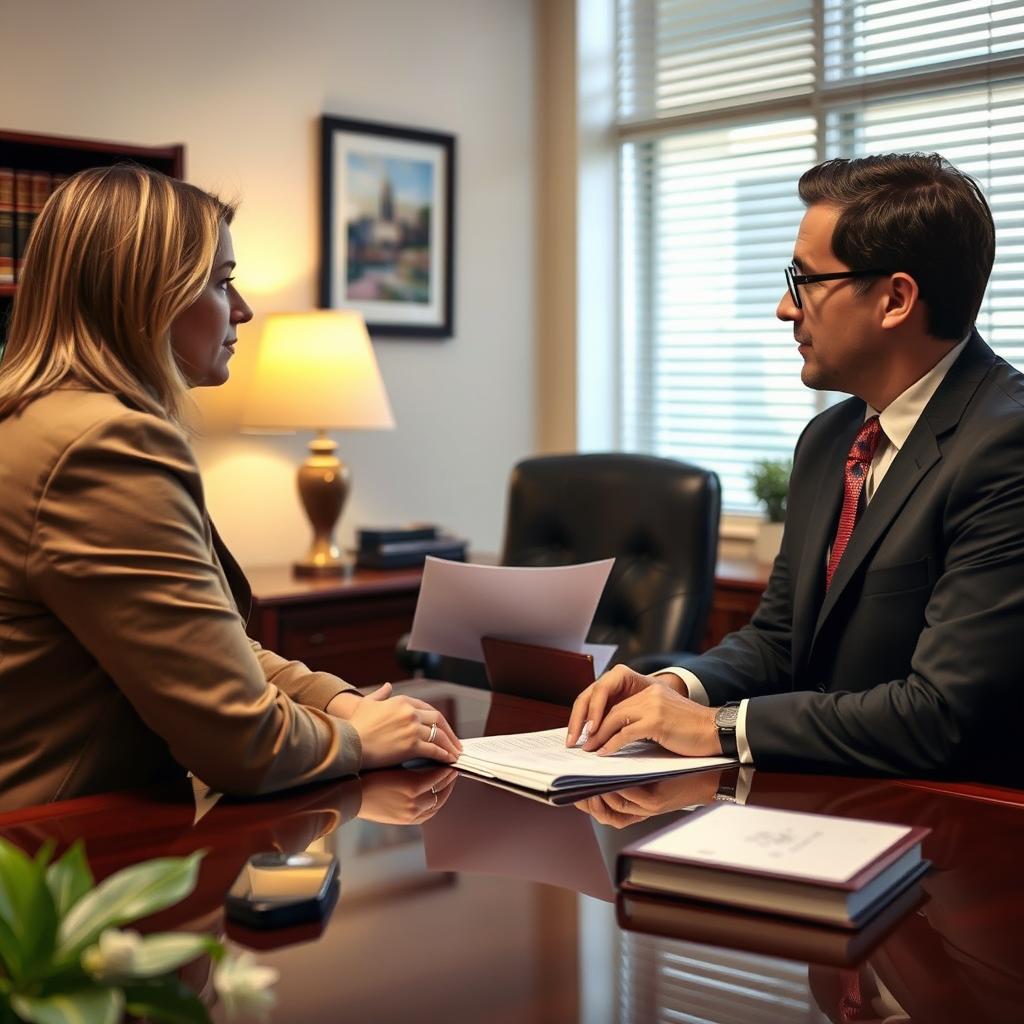
Property Division Lawyer Arlington County, VA
Dividing marital property in Arlington County, Virginia, involves the equitable distribution framework under Va. Code § 20-107.3. The Arlington County Circuit Court—located at 1425 N. Courthouse Road—has exclusive jurisdiction over divorce and the accompanying division of assets and debts. The court classifies every asset as either separate, marital, or hybrid, then distributes the marital estate based on eleven statutory factors rather than a simple fifty-fifty split. Whether the marital estate includes a family home in Ballston, retirement accounts accrued over a government career, or a small business in Clarendon, the process demands careful documentation and a clear understanding of how the local court approaches valuation and classification. Mr. Sris, Owner and Founder of Law Offices Of SRIS, P.C., and the firm’s Of Counsel attorneys represent clients in property division matters throughout Arlington, Crystal City, Rosslyn, and the surrounding neighborhoods. To request a consultation, call (888) 437-7747. Law Offices Of SRIS, P.C. – Advocacy Without Borders.
What Property Division Means in Arlington County
Virginia follows equitable distribution, not community property. Under Va. Code § 20-107.3, the Arlington County Circuit Court first identifies which assets are marital—generally, property acquired by either spouse during the marriage other than by gift or inheritance—and which are separate. Marital property is then divided based on factors that include each spouse’s contributions, the duration of the marriage, the liquidity of assets, and the tax consequences of a proposed division. The court does not start from a presumption of a fifty-fifty split; it aims for a division that is fair under the circumstances.
Arlington County’s location in the Washington, D.C. Metropolitan area means many divorcing couples hold assets with unique classification challenges: federal retirement accounts, security clearances that affect earning capacity, and real estate in a high-value market. The Circuit Court handles all divorce and equitable distribution matters, while the Juvenile and Domestic Relations District Court addresses standalone custody, support, and protective orders. Property division cases proceed in the Circuit Court alongside the divorce itself, and the same judge who grants the divorce will also enter the equitable distribution order. Counsel appearing on family law matters at the Arlington County Circuit Court must be familiar with its scheduling practices and the expectations of the local bench.
Arlington County General District Court is currently presided over by Hon. Jason S. Rucker. Court hours: Mon-Fri 8:00AM-4:00PM. Counsel appearing on family law matters should plan filings accordingly.
How Mr. Sris and the Firm’s Of Counsel Attorneys Handle Property Division Cases
Property division in Arlington County begins with a thorough inventory of all assets and debts. Mr. Sris and the firm’s Of Counsel attorneys work with clients to identify every account, piece of real estate, business interest, and retirement asset, then classify each under the marital-separate-hybrid framework. The process often involves forensic analysis of financial records and, when a business or professional practice is part of the estate, engagement of valuation attorneys. Early case assessment includes a detailed review of the statutory factors the court will apply, so that settlement negotiations are grounded in realistic expectations.
When a settlement cannot be reached, the matter moves to the Arlington County Circuit Court for trial. The court considers evidence on each of the eleven equitable distribution factors, and the presentation of that evidence requires a careful strategy. Mr. Sris and the firm’s Of Counsel attorneys present documentary evidence, expert testimony, and financial analysis to support a proposed division. Because the same Circuit Court judge handles both the divorce and the property division, the approach to property issues must remain consistent with the overall case strategy from the beginning. Throughout the process, the firm works toward a resolution that protects the client’s financial interests and provides a clear path forward after the divorce.
About Mr. Sris and the Firm’s Of Counsel Attorneys
Mr. Sris, Owner and Founder of Law Offices Of SRIS, P.C., has practiced law since 1997. He is a former prosecutor and is admitted in Virginia, Maryland, the District of Columbia, New Jersey, and New York. Mr. Sris testified before the Virginia House Courts of Justice Committee in support of 2019 HB 635 (chief patron Del. David Bulova). His practice includes complex domestic relations matters, and he and the firm’s Of Counsel attorneys bring extensive combined legal experience to property division cases. Results may vary.
The Of Counsel attorneys at Law Offices Of SRIS, P.C. Include practitioners with backgrounds in criminal prosecution, law enforcement, and CPS/child welfare litigation. This diverse experience contributes to a litigation posture that is well-prepared and thorough. On property division matters, the Of Counsel attorneys assist with discovery, motion practice, and trial preparation. The firm serves clients from its Arlington location at 1655 Fort Myer Drive, Suite 700, Room 719, by appointment.
Frequently Asked Questions
How is marital property divided in Virginia?
Virginia divides marital property under the equitable distribution framework, meaning the court aims for a division that is fair rather than equal. The Arlington County Circuit Court applies eleven statutory factors under Va. Code § 20-107.3, including each spouse’s contributions, the duration of the marriage, and the tax consequences of a proposed division. Separate property—assets owned before the marriage or acquired by gift or inheritance—remains with the owning spouse. A property settlement agreement signed by both parties can resolve all property issues without a trial.
What factors does the Arlington County Circuit Court consider when dividing property?
The court evaluates factors such as each spouse’s monetary and non-monetary contributions, the marriage’s length, the spouses’ ages and health, and how and when specific property was acquired. Debts and liabilities, the liquid or non-liquid character of assets, and the tax implications of a proposed division are also considered. The court may weigh any other factor it deems relevant. Because no single factor is dispositive, presenting a complete factual record is essential.
Can we agree on property division without going to court?
Yes, spouses may negotiate and sign a written separation agreement that resolves all property division issues outside of court. If the agreement is incorporated into the final divorce decree, it becomes a binding court order. Many Arlington County couples resolve property division through negotiation, often with attorneys facilitating the discussion, which can reduce the time and expense of litigation. The circuit court will review the agreement to ensure it is not unconscionable.
What is the difference between separate and marital property?
Separate property is generally anything owned before the marriage or received during the marriage by gift or inheritance, while marital property is everything acquired during the marriage by either spouse’s efforts. Hybrid property—such as a retirement account funded partly before and partly during the marriage—requires tracing to determine the marital share. The classification step is critical, because only marital property is subject to division.
How does the court handle retirement accounts and pensions?
The court may award a percentage of the marital share of a pension, retirement plan, or deferred compensation plan to the other spouse. Under Va. Code § 20-107.3(g), the court can direct a direct payment from the plan administrator through a Qualified Domestic Relations Order or similar mechanism. Federal retirement accounts and military pensions have their own division rules, and Arlington County’s large population of federal employees makes this a common issue in local cases.
Do I need a lawyer for property division in Arlington County?
While you are not required to have an attorney, property division involves complex legal and financial issues that benefit from experienced guidance. Misclassification of an asset or failure to account for tax consequences can affect your financial future. Mr. Sris and the firm’s Of Counsel attorneys assist clients with the entire property division process, from asset identification through trial if necessary. For a consultation, call (888) 437-7747.
Learn more about family law representation in nearby counties:
- Family Law Lawyer Fairfax County, VA
- Family Law Lawyer Prince William County, VA
- Family Law Lawyer Stafford County, VA
- Family Law Lawyer Fauquier County, VA
- Family Law Lawyer Loudoun County, VA
For more information, visit these Virginia primary sources (links open in a new tab):
Attorney advertising. Prior results do not guarantee a similar outcome.
Case results depend on a variety of factors unique to each case.