
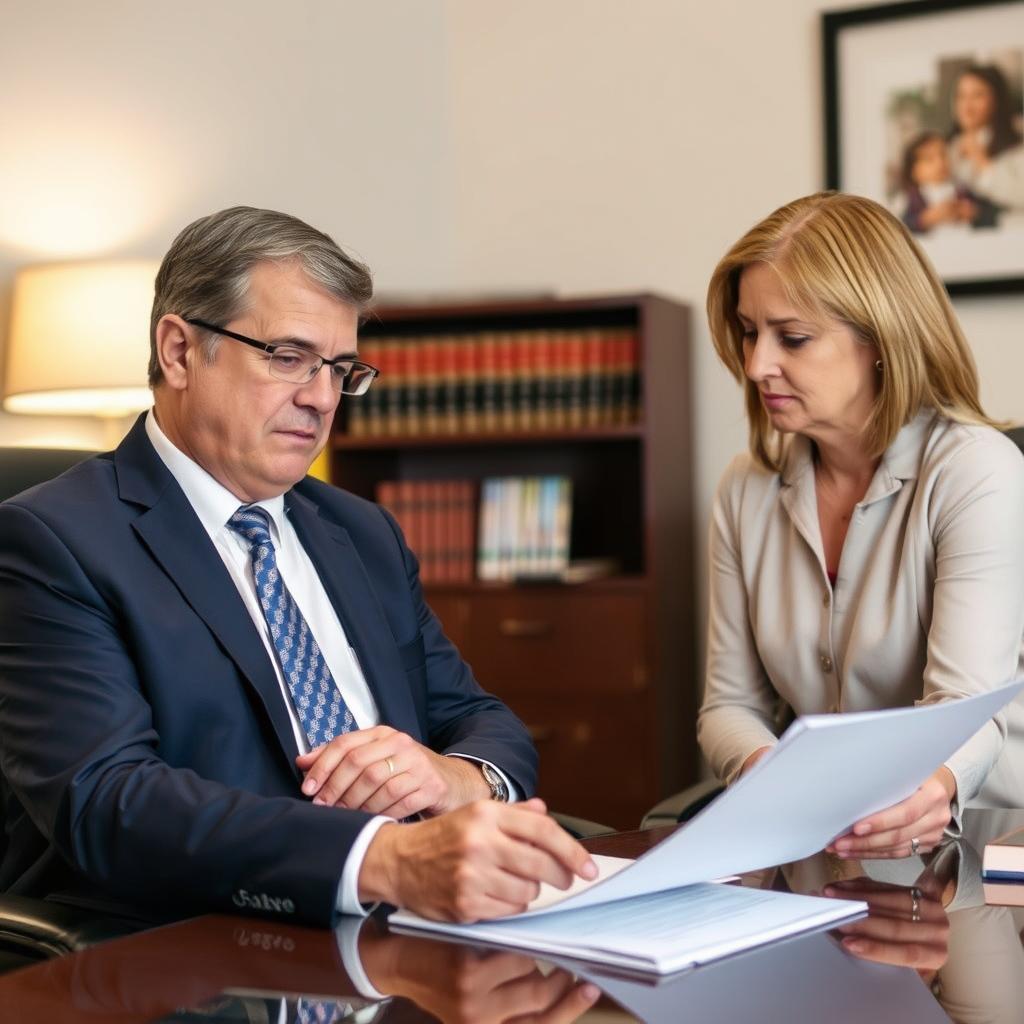
Alimony Lawyer Loudoun County, VA
You are a Loudoun County tech professional going through a divorce. For years you supported your spouse’s career choices, and now you face the possibility of paying monthly alimony for an extended period. The uncertainty over how much you could owe—and for how long—keeps you up at night. You need a clear grasp of Virginia’s spousal support framework and a legal team that can craft a strategy that protects your financial future while achieving a fair resolution. Mr. Sris and the firm’s Of Counsel attorneys concentrate a substantial part of their practice on family law matters, including alimony disputes, in Loudoun County courts. They draw on decades of combined experience in Virginia equitable distribution and support litigation to guide clients through these high‑stakes proceedings. Call (888) 437‑7747 to request a consultation. Law Offices Of SRIS, P.C. – Advocacy Without Borders.
Alimony Strategy Options in Loudoun County
Every alimony case involves two competing perspectives—one party seeks support, the other seeks to limit or avoid it. Mr. Sris and the firm’s Of Counsel attorneys build a tailored approach after a thorough review of the marriage’s financial history, each spouse’s earning capacity, and the realistic needs moving forward. For a supporting spouse, that often means documenting the other party’s ability to become self‑supporting, tracing separate property contributions, or challenging inflated claims of need. For a spouse seeking support, it may involve presenting a detailed financial affidavit, demonstrating a genuine need, and securing temporary pendente lite relief early in the case.
In Loudoun County, where many households have dual high incomes and complex asset structures, alimony disputes frequently intersect with equitable distribution. The team coordinates property division with spousal support strategy to avoid double‑counting or leaving a client exposed. Settlement negotiations are pursued whenever possible to reduce litigation costs and emotional strain, but when an acceptable settlement cannot be reached, the firm prepares for a contested hearing before the Loudoun County Circuit Court. At every stage, the goal is a support order—or a denial of support—that aligns with the statutory factors and the client’s long‑term objectives.
What to Expect in a Loudoun County Alimony Case
Alimony proceedings begin with the filing of a Complaint for divorce in Loudoun County Circuit Court, which holds exclusive jurisdiction over divorce and spousal support. If immediate financial assistance is needed, a pendente lite motion can request temporary support early in the case. The court will then schedule a hearing; Loudoun County’s docket moves at a pace set by the judges’ calendars and the complexity of discovery. The parties exchange financial records, income documentation, and asset schedules. Depositions and interrogatories are common when disputed income or hidden assets are suspected.
Virginia law requires the court to weigh thirteen statutory factors before awarding alimony, including the duration of the marriage, each spouse’s earning capacity, contributions to the family’s well‑being, and the standard of living established during the marriage. Rather than plugging numbers into a formula, the judge exercises discretion. This makes case presentation critical. The firm’s attorneys prepare comprehensive exhibits, call vocational or financial attorneys where warranted, and argue the facts in light of the statutory factors. Most Loudoun County alimony disputes resolve through negotiated separation agreements, but when trial is unavoidable, clients are supported by experienced courtroom practitioners who regularly appear before the local bench.
Virginia Alimony Law Overview
Virginia is not a formula‑driven alimony state. Instead, the court determines a fair amount and duration of spousal support based on the factors enumerated in Va. Code § 20‑107.1. The statute does not direct a particular dollar figure but asks the judge to consider the parties’ financial resources, earning capacity, the contributions of each spouse to the marriage, the length of the marriage, the standard of living during the union, and any other factor the court finds relevant. This open‑ended framework gives the court significant latitude—and makes effective advocacy essential.
Virginia law recognizes several types of alimony. Pendente lite (temporary) support can be ordered while a divorce is pending. Rehabilitative support is designed to assist a spouse while they obtain education or training to become self‑sufficient. Permanent or indefinite support is reserved for long‑term marriages where one spouse cannot reasonably achieve financial independence. Modification of an existing alimony award is allowed only upon a showing of a material change in circumstances, such as involuntary job loss, disability, or cohabitation of the supported spouse in a marriage‑like relationship. Enforcement actions, including show‑cause motions and wage garnishments, are available when a paying spouse fails to comply with a court order.
All alimony matters in Loudoun County are heard in the Circuit Court, located at 18 East Market Street, Leesburg, Virginia. The court can also address support within a broader divorce decree, dividing marital property through equitable distribution simultaneously. Because alimony and property division can offset one another, a coordinated approach is vital. Mr. Sris and the firm’s Of Counsel attorneys have substantial experience weaving together equitable distribution and spousal support arguments to present a cohesive case to the court.
About Mr. Sris and the Firm’s Of Counsel Attorneys
Mr. Sris, Owner and Founder of Law Offices Of SRIS, P.C., has practiced family law since the firm was established in 1997. A former prosecutor, he brings a trial‑tested perspective to every family law matter, including alimony disputes. He has testified before the Virginia House Courts of Justice Committee in support of 2019 HB 635 (chief patron Del. David Bulova), a bill addressing procedural aspects of equitable distribution. His understanding of Virginia’s divorce laws is informed by decades of courtroom experience and a commitment to personalized representation.
The firm’s Of Counsel attorneys—independent practitioners who contract directly with Law Offices Of SRIS, P.C.—supplement Mr. Sris’s work with their own extensive backgrounds in family law, criminal defense, and civil litigation. Together, they have handled a wide range of alimony matters for clients throughout Loudoun County, from negotiated separation agreements to contested support trials. The team’s collaborative approach means each client benefits from a collective reservoir of legal insight. When you schedule a consultation, you meet with professionals who understand the financial and emotional dimensions of spousal support and who will work diligently toward a resolution that fits your circumstances. Results vary; prior outcomes do not guarantee a similar result.
Frequently Asked Questions
How is alimony decided in Virginia?
Virginia judges weigh thirteen factors listed in Va. Code § 20‑107.1 to set alimony, rather than applying a fixed formula. These factors include the length of the marriage, each spouse’s earning capacity, contributions to the household, and the standard of living during the marriage. The judge has broad discretion, which means presenting a persuasive case with detailed financial evidence is crucial. In Loudoun County Circuit Court, the judge may award temporary support while the divorce is pending, rehabilitative support to help a spouse gain job skills, or permanent support in long‑term marriages where independence is unrealistic. The absence of a calculator makes skilled advocacy the decisive element in most contested alimony disputes.
Can alimony be modified after a divorce in Loudoun County?
Yes, a Virginia court can modify alimony if the party seeking a change demonstrates a material change in circumstances since the last order. A material change might include involuntary job loss, significant health problems, a substantial increase or decrease in either party’s income, or cohabitation by the supported spouse in a relationship analogous to marriage. The party requesting modification must file a motion in Loudoun County Circuit Court and present evidence of the changed circumstances. The existing support obligation remains in place until the court rules. The firm’s attorneys assist clients in assembling the necessary documentation and arguing for or against a modification that reflects the current reality.
What types of alimony are available under Virginia law?
Virginia recognizes pendente lite (temporary), rehabilitative, and permanent spousal support, as well as lump‑sum alimony in certain cases. Pendente lite support covers needs while the divorce is pending. Rehabilitative support is time‑limited, designed to assist a spouse while they complete education or training that will lead to self‑sufficiency. Permanent support is reserved for marriages of long duration where a spouse cannot reasonably become self‑supporting. Lump‑sum alimony, paid as a single amount rather than monthly, can sometimes serve as a clean‑break alternative. The appropriate type depends on the specific facts of the marriage and the parties’ financial situations, all of which the court evaluates under the statutory factors.
Do I need a lawyer for alimony negotiations in Loudoun County?
You are not required to hire an attorney, but an experienced alimony lawyer can help ensure your rights are protected and that any agreement you sign is fair and legally sound. Alimony calculations intersect with property division, tax considerations, and the cost of living in Northern Virginia. Without legal guidance, a party may accept a deal that undervalues future earning capacity or overlooks the possibility of modification. An attorney can present a compelling case to the other side, negotiate from a position of strength, and, if necessary, litigate the issue in Loudoun County Circuit Court. Given the long‑term financial impact of a spousal support order, most people find that professional representation is a worthwhile investment.
What if my ex‑spouse stops paying court‑ordered alimony?
You can enforce the order by filing a show‑cause motion in Loudoun County Circuit Court, which can result in a judgment for the unpaid amounts and, if the non‑payment is willful, contempt sanctions. The court may order wage garnishment, place a lien on property, or require the delinquent spouse to post a bond. Contempt findings can lead to fines or jail time in egregious cases. Our firm helps clients document the unpaid sums, prepare the enforcement motion, and present a clear case to the judge. Swift action is important because support arrears accumulate quickly and can become more difficult to collect with time.
How long does an alimony case usually last in Loudoun County?
The timeline depends on whether the case settles or goes to trial and on the court’s calendar; a straightforward case may resolve within a few months, while a contested trial can extend well beyond a year. Pendente lite hearings can be scheduled relatively quickly to address immediate needs. Cases that involve complex financial discovery, business valuations, or disputes over hidden income take longer. The firm works to move cases efficiently by preparing thorough disclosures early, exploring settlement at every stage, and readying the case for trial when compromise is not feasible. Reach our Ashburn location to discuss a realistic timeline for your particular situation.
Request a Consultation
Alimony in Loudoun County can shape your financial life for years. Whether you anticipate paying or receiving support, having a knowledgeable legal team on your side is essential. Mr. Sris and the firm’s Of Counsel attorneys offer consultations to review your circumstances, explain the Virginia statutes that govern alimony, and outline a strategy designed to protect your interests. Call (888) 437‑7747 or contact our Ashburn location to schedule an appointment.
Ashburn Location
Law Offices Of SRIS, P.C.
20130 Lakeview Center Plaza, Room 403
Ashburn, VA 20147
By appointment only. Call (888) 437‑7747 to schedule.
For a complete statutory analysis, see our comprehensive overview at srislawyer.com/divorce-lawyer.
Primary sources: Virginia Code Title 20 – Domestic Relations | Loudoun County Circuit Court
Attorney advertising. Prior results do not guarantee a similar outcome. Results may vary.
Case results depend on a variety of factors unique to each case.