
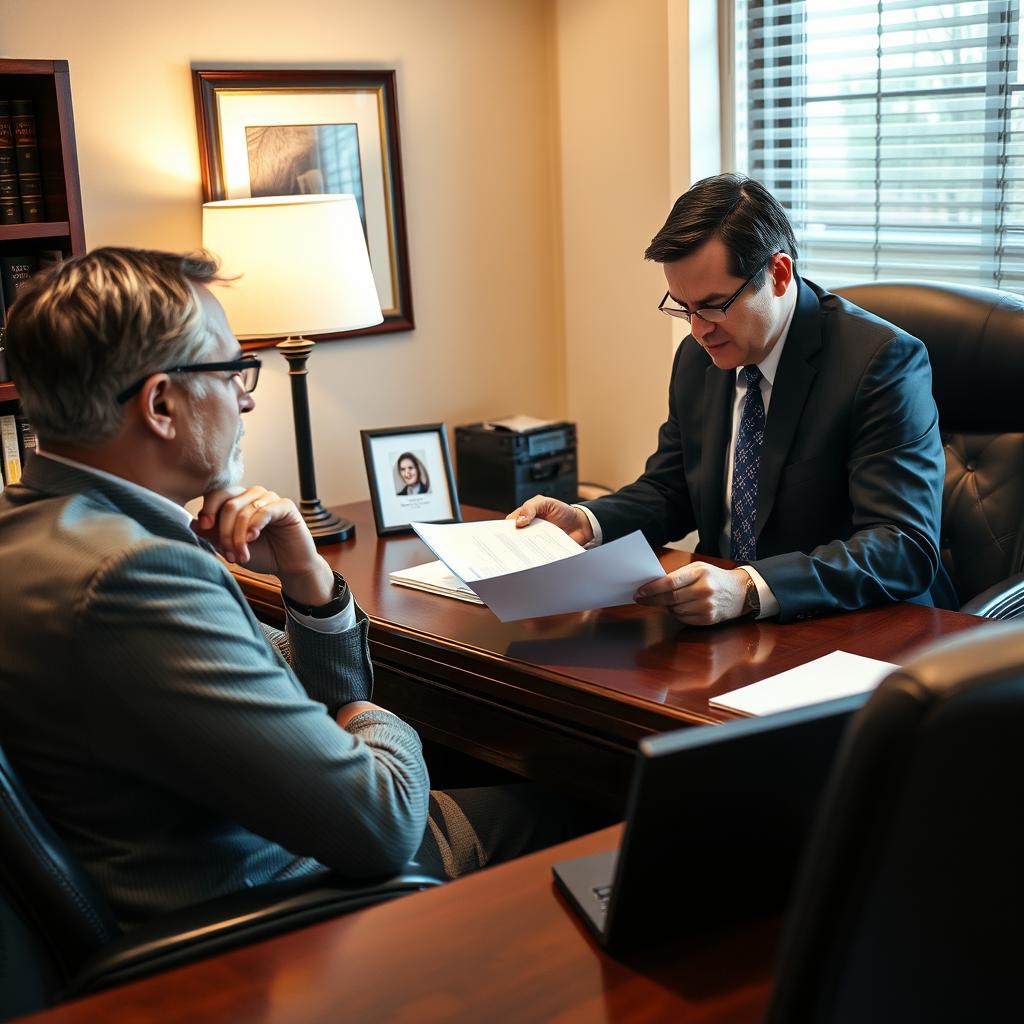
Felony Conviction Divorce Lawyer Manassas, VA
If your spouse has been convicted of a felony and sentenced to imprisonment for more than one year, Virginia law gives you the right to seek an immediate divorce on fault grounds under Va. Code § 20‑91. A felony conviction divorce lawyer in Manassas represents the spouse who is seeking to end the marriage—not the incarcerated individual. The process bypasses the usual six‑month or one‑year separation requirement, because the felony conviction itself serves as the legal ground. For Manassas, Manassas Park, and the surrounding Prince William County area, the case is filed and heard in the Manassas Circuit Court at 9311 Lee Avenue, while related custody and support matters proceed in the Manassas Juvenile and Domestic Relations District Court. Mr. Sris and his Of Counsel team bring extensive combined legal experience to these divorce matters, helping clients move forward with their lives. To request a consultation about a felony conviction divorce, reach Law Offices Of SRIS, P.C. at (888) 437‑7747. Law Offices Of SRIS, P.C. – Advocacy Without Borders.
Understanding a Felony Conviction Divorce in Virginia
Under Virginia law, a spouse may file for divorce on the ground of felony conviction if the other spouse has been convicted of a felony and sentenced to confinement for more than one year. This is a fault‑based ground, meaning no separation period is required before filing the complaint. The statute also encompasses a situation where the convicted spouse is confined in a state or federal correctional facility. Importantly, the ground becomes available upon sentencing—the divorce may proceed even if the convicted spouse has not yet served the full sentence. The Manassas Circuit Court exercises exclusive jurisdiction over the divorce itself, including the equitable distribution of marital property and any award of spousal support. Matters of child custody, visitation, and child support are typically heard in the Manassas Juvenile and Domestic Relations District Court, either as part of the divorce case or through separate petitions. India is not a signatory to the 1980 Hague Convention on Civil Aspects of International Child Abduction. A felony conviction divorce often involves unique practical challenges: service of process on an incarcerated spouse, the restricted ability of the incarcerated spouse to participate in litigation, and the potential impact of the felony on custody determinations. Because Virginia is an equitable distribution state, the court divides marital assets based on fairness, not a rigid fifty‑fifty formula, and a felony conviction can influence certain distribution factors.
How a Manassas Felony Conviction Divorce Lawyer Handles Your Case
When you engage Mr. Sris and his Of Counsel team for a felony conviction divorce, the process begins with a detailed consultation to confirm the statutory ground, gather the conviction documentation, and identify all marital assets and debts. The complaint for divorce (formerly called a bill of complaint) is filed with the Manassas Circuit Court clerk at 9311 Lee Avenue, Suite 230, Manassas, VA 20110. Service on an incarcerated spouse follows the rules of the Virginia Supreme Court; the firm coordinates service through the correctional facility’s designated legal representative or, when necessary, requests alternative service from the court. Once the complaint is served, the incarcerated spouse has a period to respond. If the defendant fails to respond, the court may grant a divorce by default after the required notices. When the defendant contests the divorce, the case moves toward a trial or an evidentiary hearing. Throughout the process, Mr. Sris and his Of Counsel handle the asset‑discovery stage, address any temporary custody or support needs through pendente lite motions, and negotiate a final resolution when possible. Although the felony conviction ground eliminates the separation waiting period, the overall timeline varies by case complexity, the availability of the incarcerated spouse, and the court’s calendar.
About Mr. Sris and His Of Counsel Team
Mr. Sris, Owner and Founder of Law Offices Of SRIS, P.C., has practiced family law since 1997. He is a former prosecutor who understands how criminal proceedings and family law intersect when a spouse is incarcerated. Mr. Sris testified before the Virginia House Courts of Justice Committee in support of 2019 HB 635 (chief patron Del. David Bulova), a bill that revised Virginia’s equitable distribution statute, Va. Code § 20‑107.3. His Of Counsel attorneys contribute deep litigation backgrounds, including former law‑enforcement and prosecutorial experience, which proves valuable when addressing the procedural and custodial dimensions of a felony conviction divorce. Together, Mr. Sris and his Of Counsel bring extensive combined legal experience to family‑law matters in Manassas, Manassas Park, Prince William County, and across Virginia. The firm’s Fairfax location serves clients in the Manassas area by appointment. To schedule a consultation about your divorce, contact Law Offices Of SRIS, P.C. at (888) 437‑7747.
Frequently Asked Questions
What is a felony conviction divorce in Virginia?
A felony conviction divorce is a fault‑based divorce available when one spouse is convicted of a felony and sentenced to more than one year in prison. Under Va. Code § 20‑91, the innocent spouse may file immediately without waiting for a separation period. The ground applies regardless of where the conviction occurred, as long as the convicted spouse is serving a sentence of more than twelve months. The divorce complaint is filed in the circuit court where either party resides, which for Manassas residents is the Manassas Circuit Court.
Do I need to live separately before filing for a felony conviction divorce?
No separation period is required when you file for divorce on the ground of felony conviction. Unlike a no‑fault divorce, which requires either six months of separation (with no minor children and a signed agreement) or one year of separation, the felony conviction ground allows you to file the complaint immediately after the conviction and sentencing occur. You and your spouse may still be legally living at the same residence at the time of filing, though practical circumstances often make cohabitation impossible.
How does a spouse’s felony conviction affect child custody in Virginia?
A felony conviction can affect custody because the court considers the best interests of the child under Va. Code § 20‑124.3, and a parent’s incarceration is a relevant factor. While incarceration alone does not automatically disqualify a parent, the court will evaluate the length of the sentence, the nature of the crime, the parent’s ability to maintain a relationship with the child, and any history of family abuse. The Manassas Juvenile and Domestic Relations District Court—or the Circuit Court when custody is raised within the divorce—will weigh these factors along with the other statutory considerations.
Can I get a divorce if my spouse is incarcerated in another state?
Yes, you can file for a felony conviction divorce in Virginia even if your spouse is incarcerated outside of Virginia. Virginia’s grounds for divorce do not require that the conviction occur in Virginia. As long as you meet the residency requirement—you or your spouse must have been a resident and domiciliary of Virginia for at least six months before filing—Virginia courts have jurisdiction. Service of process on an out‑of‑state incarcerated spouse is done through the appropriate correctional facility’s legal office, and the court may authorize alternative service methods if service proves difficult.
How does a felony conviction impact property division in a divorce?
A felony conviction can influence the equitable distribution of marital property under Va. Code § 20‑107.3. While Virginia divides property based on fairness, the court considers factors that may be affected by the conviction, including the circumstances contributing to the dissolution of the marriage, the acts of either party that led to the separation, and the earning capacity of each spouse. If the convicted spouse’s incarceration limits their ability to generate income, the court may adjust the division of assets or the award of spousal support accordingly.
What if the incarcerated spouse contests the divorce?
If the incarcerated spouse files an answer contesting the divorce, the case moves toward litigation rather than proceeding as a default matter. The incarcerated spouse has the same due‑process rights as any civil litigant: they may file a response, request a hearing, and present evidence. The court will hold an evidentiary hearing or trial, at which the incarcerated spouse may appear by video conference or, if transportation is arranged, in person. Mr. Sris and his Of Counsel prepare for contested felony conviction divorces by assembling the conviction record, financial documents, and any witness testimony needed to prove the ground and address asset division and custody.
Is alimony available in a felony conviction divorce?
Spousal support may be awarded in a felony conviction divorce, but the incarcerated spouse’s ability to pay will be a central issue. The court evaluates the factors listed in Va. Code § 20‑107.1, including the receiving spouse’s need, the paying spouse’s income and resources, and any fault that contributed to the marriage’s breakdown. When the paying spouse is incarcerated, the court will examine their prison earnings, available assets, and potential future earnings upon release. A carefully structured support order may be entered, though enforcement during the term of incarceration can require creative legal approaches.
How long does a felony conviction divorce take in Manassas?
The timeline varies depending on whether the divorce is contested, the difficulty of serving the incarcerated spouse, and the schedule of the Manassas Circuit Court. An uncontested case in which the incarcerated spouse is properly served and fails to respond can often be concluded within a few months. A contested case or one in which service is logistically complicated—such as when the spouse is in a federal facility or out‑of‑state—extends the process. The court will set the final hearing once all procedural requirements, including any mandatory notice periods, are met.
Do I need a lawyer for a felony conviction divorce?
While you are not legally required to hire a lawyer, proceeding without one can create practical obstacles in a felony conviction divorce. Navigating service of process on an incarcerated spouse, correctly drafting the complaint and supporting affidavit, and addressing the interplay between criminal‑case records and family‑court procedure all benefit from experienced counsel. A misstep in the filing or service phase can delay the divorce or result in dismissal. Mr. Sris and his Of Counsel handle every stage of the case, from the initial filing to the final decree.
Can a felony conviction divorce affect immigration status?
A divorce based on a spouse’s felony conviction can have immigration consequences, particularly if the convicted spouse’s lawful status depends on the marriage. A divorce that ends a marriage before an immigrant spouse obtains permanent residency may affect a pending application. Additionally, a felony conviction itself can trigger removal proceedings or make a noncitizen inadmissible. When immigration concerns exist, Mr. Sris and his Of Counsel work alongside experienced immigration counsel to advise clients on how the divorce case may interact with immigration law.
Additional Manassas‑area family law pages:
- Fairfax County Family Law Lawyer
- Fairfax City Family Law Lawyer
- Falls Church Family Law Lawyer
- Prince William County Family Law Lawyer
- Manassas Park Family Law Lawyer
Official Virginia resources:
Attorney advertising. Prior results do not guarantee a similar outcome.
Case results depend on a variety of factors unique to each case.