
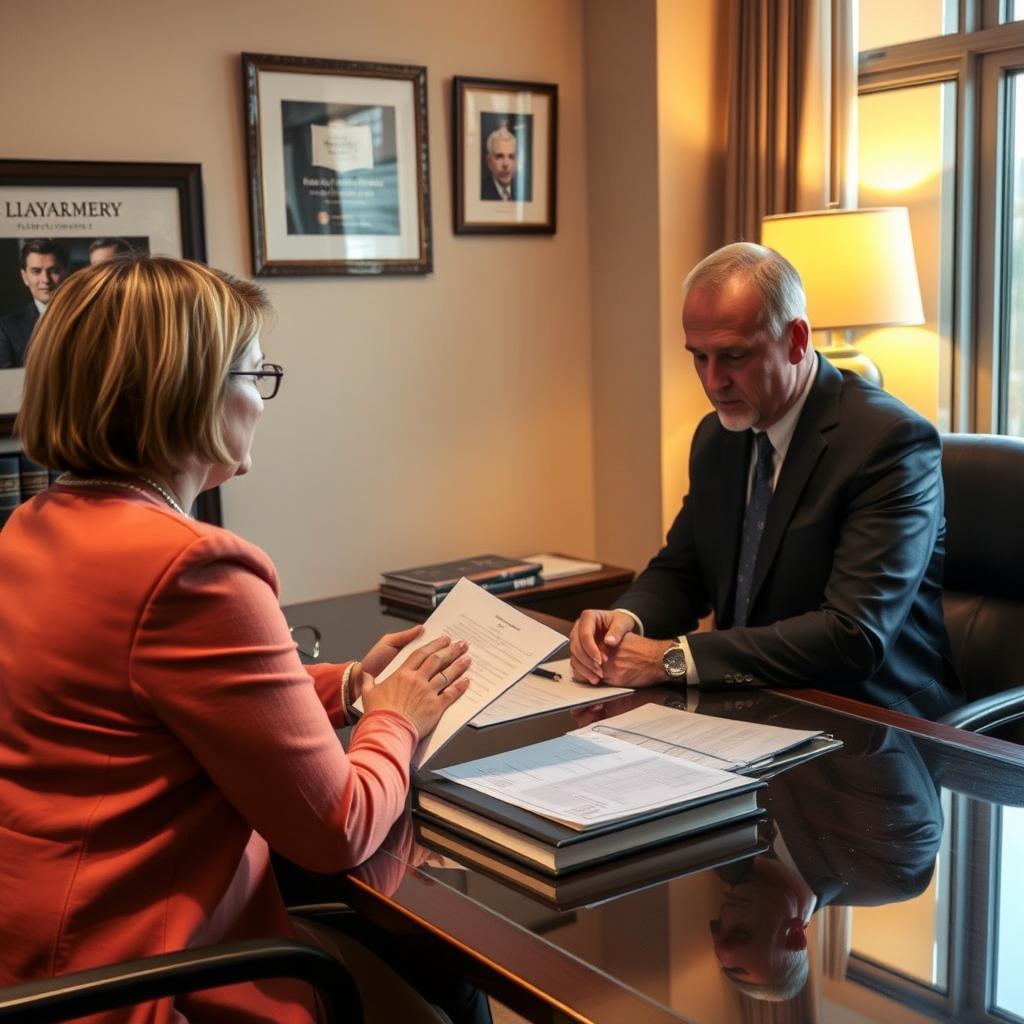
Felony Conviction Divorce Lawyer Arlington County, VA
When a spouse has been convicted of a felony and sentenced to more than a year of confinement, Virginia law provides a fault-based ground for divorce under Va. Code § 20‑91. This ground does not require a separation period, and the divorce can move forward as soon as the conviction and sentence are properly before the Arlington County Circuit Court. Mr. Sris and his Of Counsel team at Law Offices Of SRIS, P.C. help clients in Arlington, Crystal City, Rosslyn, Clarendon, Ballston, Pentagon City, and Shirlington pursue divorce on this ground while addressing the related issues of equitable distribution, spousal support, child custody, and child support. Whether you are the spouse of an incarcerated individual or your spouse’s felony sentence has already been served, our firm can evaluate your situation and guide you through the Arlington County court system. Reach Law Offices Of SRIS, P.C. at (888) 437‑7747 to schedule a consultation. Law Offices Of SRIS, P.C. – Advocacy Without Borders.
Obtaining a Divorce Based on a Spouse’s Felony Conviction in Arlington County
Virginia is an equitable distribution state, and the courts decide how marital property will be divided between the parties. A felony‑conviction divorce is a fault ground listed in Va. Code § 20‑91, which allows an innocent spouse to seek an absolute divorce without the one‑year or six‑month separation period that no‑fault divorce demands. The statute simply requires that the offending spouse has been sentenced to confinement for more than one year following a felony conviction. The conviction need not be recent; it remains a valid fault ground even if the sentence has been completed. The divorce complaint must be filed in the Arlington County Circuit Court, which has exclusive original jurisdiction over divorce matters. The Arlington County Juvenile and Domestic Relations District Court, at 1425 N. Courthouse Rd, handles related custody, visitation, child support, and protective‑order issues. Mr. Sris and his Of Counsel prepare the necessary pleadings, gather evidence of the conviction and sentence, and represent clients at all court appearances in Arlington County. Because the ground does not require a waiting period, a divorce based on a spouse’s felony conviction can often proceed more quickly than a no‑fault divorce, though the timeline depends on the court’s docket and the degree of cooperation from the other side.
Frequently Asked Questions
What is a felony‑conviction divorce in Virginia?
A felony‑conviction divorce is a fault‑based ground for absolute divorce under Va. Code § 20‑91. It allows a spouse to file for divorce when the other spouse has been convicted of a felony and sentenced to more than one year of confinement. Unlike no‑fault divorce, there is no mandatory separation period, so the case can move forward as soon as the conviction and sentence are established. The divorce petition is filed in the Arlington County Circuit Court. Mr. Sris and his Of Counsel can evaluate whether this ground applies to your situation and prepare the necessary documentation.
What must I prove to obtain a divorce based on a spouse’s felony conviction?
You must present evidence that the spouse has been convicted of a felony in any jurisdiction and that the sentence imposed includes confinement of more than one year. Acceptable evidence typically includes certified copies of the conviction order and sentencing documents. The conviction does not have to have occurred in Virginia, but the documentation must be authenticated for use in the Arlington County Circuit Court. Our firm works with clients to locate and prepare these records so the court has the information it needs to grant the divorce.
How long does a divorce based on felony conviction take in Arlington County?
The timeline varies by case. There is no mandatory separation period, so the divorce can be filed as soon as you have the necessary evidence. The Arlington County Circuit Court schedules a hearing once all documents are filed and the defendant has been served or appears. If the other spouse is incarcerated and does not contest the divorce, the case may be resolved more quickly. Contested matters such as equitable distribution of complex assets or a dispute over custody can extend the timeline. Mr. Sris and his Of Counsel work to move your case forward efficiently.
How does a felony conviction affect equitable distribution and spousal support?
The Arlington County Circuit Court considers the circumstances that led to the dissolution of the marriage when dividing marital property and deciding spousal support under Va. Code § 20‑107.3 and § 20‑107.1. A spouse’s felony conviction and incarceration is a factor that may influence the court’s decision on an equitable distribution award. For example, if marital assets were misused to fund a criminal defense, that dissipation can be addressed. Spousal support may be awarded based on the needs of the innocent spouse and the convicted spouse’s ability to pay, which may be affected by incarceration.
Can I get custody of my children if my spouse is incarcerated?
Custody and visitation are decided separately from the divorce in the Arlington County Juvenile and Domestic Relations District Court. The standard is the best interests of the child under Va. Code § 20‑124.3. A parent’s incarceration is a relevant factor because it affects the parent’s ability to provide a stable home and to exercise regular visitation. However, the court may still allow phone calls, letters, or supervised visits with the incarcerated parent if that is in the child’s best interests. Our firm advocates for custody arrangements that protect the child’s welfare.
Do I need a lawyer for a felony‑conviction divorce in Arlington County?
While you are not legally required to hire a lawyer, having experienced counsel helps ensure that your rights are fully protected. Felony‑conviction divorces involve procedural requirements like authenticating criminal records, serving an incarcerated spouse properly, and requesting equitable distribution in the Circuit Court. Mistakes can delay the case or result in an unfair outcome. Mr. Sris and his Of Counsel team bring extensive combined legal experience to handling these matters, and we can manage the litigation so you can focus on moving forward.
What if my spouse was convicted in another state or in federal court?
The Virginia divorce statute does not require that the conviction occurred in Virginia. A federal felony conviction or a state‑court conviction from another jurisdiction qualifies as long as the sentence includes confinement of more than one year. You must provide authenticated copies of the out‑of‑state or federal judgment and sentencing order. Our firm assists clients in obtaining and authenticating these documents for use in the Arlington County Circuit Court. The court will accept properly certified copies under Virginia’s rules of evidence.
Can I file for divorce while my spouse is still serving the sentence?
Yes. The statute does not require that the sentence be completed, only that the spouse was sentenced to confinement of more than one year for a felony. If your spouse is currently incarcerated, you can file the divorce complaint in the Arlington County Circuit Court and arrange for service of process at the correctional facility. The court can grant the divorce and address all attendant issues, including property division and support, even while the spouse remains incarcerated.
About Mr. Sris and His Of Counsel Team
Mr. Sris, Owner and Founder of Law Offices Of SRIS, P.C., has practiced law since 1997 and is admitted in Virginia, Maryland, the District of Columbia, New Jersey, and New York. A former prosecutor, he brings courtroom experience to every family‑law matter the firm handles. His Of Counsel team works collaboratively on Arlington County divorce cases, including those grounded on a spouse’s felony conviction. The firm’s Arlington location, at 1655 Fort Myer Dr, Suite 700, Room 719, Arlington, VA 22209, serves clients throughout Arlington County and the surrounding communities. For a consultation about a felony‑conviction divorce, reach Mr. Sris and his Of Counsel at (888) 437‑7747.
More family‑law resources: Fairfax County family law representation | Prince William County family law | Stafford County family law | Fauquier County family law | Loudoun County family law
Attorney advertising. Prior results do not guarantee a similar outcome.
Case results depend on a variety of factors unique to each case.
Attorney responsible for this advertising: Mr. Sris.
Results may vary.