
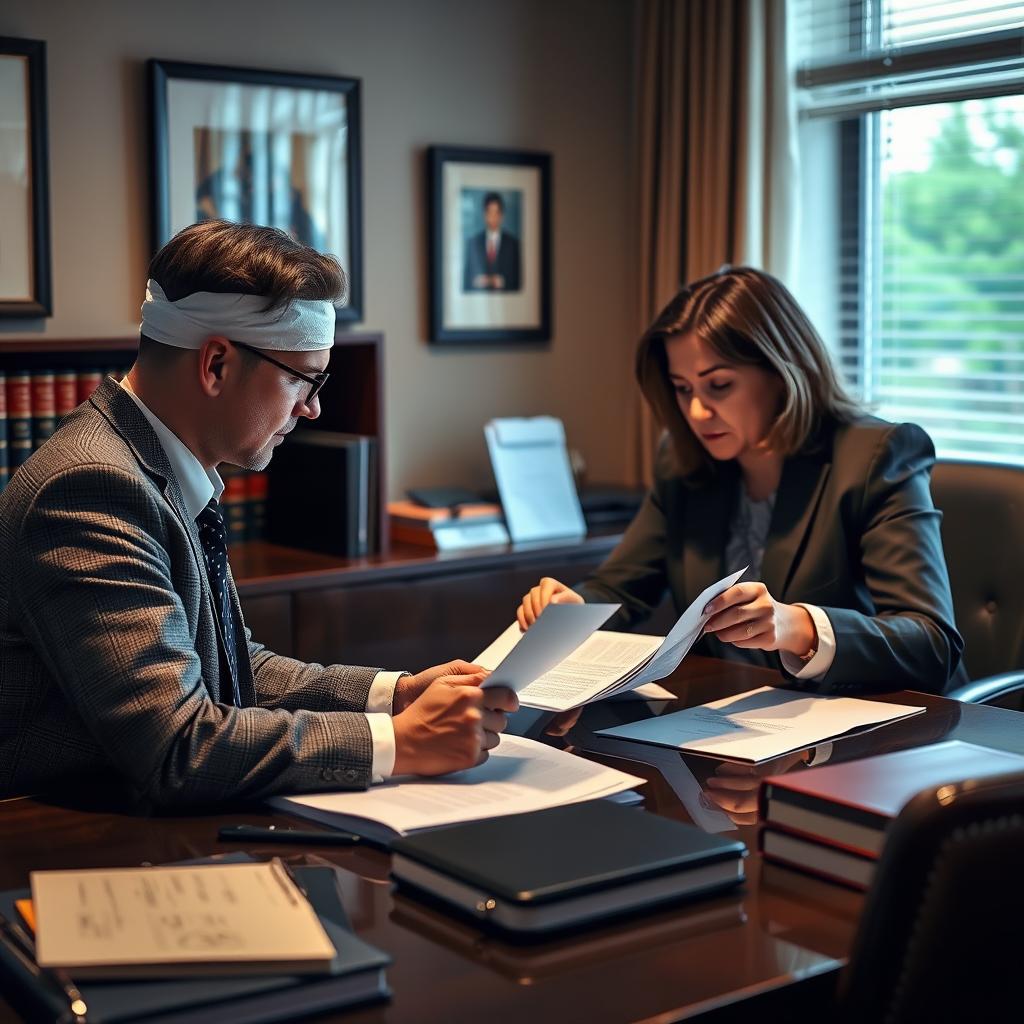
Contract Negotiation Lawyer Fairfax, VA
Businesses, professionals, and individuals across Fairfax County and the City of Fairfax depend on carefully negotiated contracts to safeguard their rights and manage risk. Contract negotiation is not simply about signing an agreement; it involves a thorough understanding of Virginia law, including the Virginia Uniform Commercial Code (Va. Code § 8.1A-101 et seq.) for goods, common-law principles for services, and the procedural framework of the Fairfax courts. Whether you are forming a business-to-business supply agreement, a construction contract, a licensing deal, or a service agreement, the specific language you settle on governs your legal rights and obligations. Law Offices Of SRIS, P.C., founded in 1997, advises clients throughout Fairfax on contract negotiation, review, and drafting. Mr. Sris and his Of Counsel team work to clarify terms, anticipate potential areas of disagreement, and structure agreements that are enforceable under Virginia law. In Virginia, claims arising from a written contract must be filed within five years (Va. Code § 8.01-246(2)), while oral agreements carry a three-year limitations period. Disputes that cannot be resolved through negotiation may be heard in the Fairfax County General District Court or the Fairfax Circuit Court. For a consultation about your contract matter, call (888) 437-7747. Law Offices Of SRIS, P.C. – Advocacy Without Borders.
What Contract Negotiation Means in Fairfax, VA
Contract negotiation in the Fairfax area takes place against a backdrop of a dynamic Northern Virginia economy, where technology firms, government contractors, construction companies, and professional service providers routinely enter into agreements that shape their operations. The presence of major transportation corridors like I‑66 and the Capital Beltway, combined with proximity to Washington, D.C., means that many contracts involve parties from multiple jurisdictions. Law Offices Of SRIS, P.C. maintains a Fairfax location at 4008 Williamsburg Court, Fairfax, VA 22032, and serves clients in Fairfax, Burke, Centreville, Chantilly, Herndon, Reston, McLean, Vienna, Tysons, Springfield, Annandale, and surrounding communities. Mr. Sris and his Of Counsel are familiar with the local court system, including the Fairfax County General District Court, the Fairfax County Circuit Court, and the Fairfax City General District Court. This local familiarity allows them to structure agreements and, when necessary, litigate disputes with an understanding of how Virginia judges in the Nineteenth Judicial District typically approach contract interpretation.
Virginia courts enforce contracts as written and apply the parol evidence rule strictly, meaning that the final written agreement is the primary source of the parties’ obligations. This makes the negotiation phase critical. A poorly drafted provision in a construction subcontract, for example, can lead to mechanic’s lien disputes or prolonged litigation in the Fairfax County Circuit Court. Similarly, a business‑to‑business distribution agreement that lacks clear indemnity or warranty terms may expose a company to significant financial exposure. Mr. Sris and his Of Counsel focus on anticipating these pressure points during the negotiation stage, drawing on their collective experience with Virginia contract law and the procedural realities of the Fairfax courts. By addressing potential disputes before they arise, clients can often avoid the cost and uncertainty of litigation.
How Mr. Sris and His Of Counsel Handle Contract Negotiation Cases
Mr. Sris and his Of Counsel take a practical approach to contract negotiation in Fairfax. The process often begins with a review of the existing agreement or the proposed terms, followed by a detailed discussion of the client’s business goals, risk tolerance, and the specific requirements of Virginia law. In many cases, the firm’s attorneys negotiate directly with the other party’s legal counsel or business representatives to revise language, address ambiguous clauses, and ensure that the final contract accurately reflects the parties’ understanding. When disputes arise after a contract is signed, the team works to resolve them through demand letters, negotiation, mediation, or, if necessary, litigation in the appropriate Fairfax court.
Because Virginia law distinguishes between contracts for goods, which are governed by the Uniform Commercial Code, and contracts for services, which are governed by common-law principles, the negotiation strategy varies depending on the nature of the agreement. For instance, a service contract dispute may turn on whether a party substantially performed its obligations, while a goods contract under the UCC may involve questions of warranty, acceptance, and cure. Mr. Sris and his Of Counsel analyze these distinctions early in the process to set realistic expectations and develop a negotiation posture that protects the client’s interests. The timeline for resolving a contract negotiation matter depends on the complexity of the issues and the willingness of the parties to reach an agreement, and the firm works to move matters forward efficiently without compromising the client’s position.
About Mr. Sris and His Of Counsel Team
Mr. Sris, Owner and Founder of Law Offices Of SRIS, P.C., has been practicing since 1997. A former prosecutor, Mr. Sris is admitted in Virginia, Maryland, the District of Columbia, New Jersey, and New York. He testified before the Virginia House Courts of Justice Committee in support of 2019 HB 635 (chief patron Del. David Bulova). Mr. Sris and his Of Counsel bring over 120 years of combined legal experience and have achieved over 4,739 documented firm-wide results. Results may vary. The contract negotiation work is handled by Mr. Sris and his Of Counsel team, which includes attorneys with extensive backgrounds in business, commercial, and contract law. Their collective experience encompasses contract formation, negotiation, breach analysis, and the pursuit of remedies such as specific performance and monetary damages under Virginia law.
Clients benefit from the firm’s multi‑state perspective and its practical understanding of how contract disputes unfold in Fairfax courts. Whether a matter involves a construction contract, a licensing agreement, a service contract, or a business‑to‑business supply arrangement, the team focuses on clear communication and thorough preparation. Mr. Sris and his Of Counsel work with clients to evaluate the strengths and weaknesses of a proposed agreement, anticipate points of contention, and craft language that reduces the likelihood of future litigation. The firm’s approach is grounded in the recognition that every contract negotiation is unique, and it tailors its strategy to the specific facts and business objectives of each matter.
Frequently Asked Questions
What does a contract negotiation lawyer do in Fairfax, VA?
A contract negotiation lawyer in Fairfax helps clients draft, review, and negotiate the terms of contracts to ensure they are clear, enforceable, and protect the client’s interests under Virginia law. The lawyer works with the client to identify key provisions—such as payment terms, warranties, indemnity clauses, dispute resolution procedures, and limitation‑of‑liability language—and then engages with the other party’s legal counsel to reach a mutually acceptable agreement. When a dispute arises during negotiation or after performance, the lawyer advises on the available remedies, which may include filing a claim in the Fairfax County General District Court or Circuit Court. The focus is on preventing litigation, but the lawyer is prepared to litigate if necessary.
Do I need a lawyer to negotiate a contract in Fairfax?
You are not legally required to hire a lawyer to negotiate a contract in Fairfax, but legal guidance helps ensure that the agreement complies with Virginia law and that your rights are fully protected. Many individuals and businesses enter into contracts without legal review only to discover later that a poorly drafted clause has created an unintended liability or an unenforceable obligation. An experienced contract negotiation lawyer can identify ambiguous language, explain how Virginia courts are likely to interpret specific provisions, and negotiate modifications that strengthen your position. Because Virginia enforces contracts as written under the parol evidence rule, the time to get the terms right is before the agreement is signed.
How can an attorney help with a breached contract in Fairfax County?
An attorney can evaluate the breach, determine the appropriate remedy under Virginia law, and pursue enforcement through negotiation, mediation, or litigation in the Fairfax County courts. Virginia law permits remedies such as compensatory damages, specific performance, and rescission. An experienced contract lawyer will first review the agreement to determine whether a material breach has occurred and whether any defenses—such as waiver, impossibility, or failure of a condition precedent—may apply. The attorney can then send a demand letter seeking cure or compensation, negotiate a settlement, or file a complaint in the Fairfax County General District Court or Circuit Court, depending on the amount in controversy. Early involvement often leads to a faster resolution.
What makes a contract enforceable under Virginia law?
For a contract to be enforceable in Virginia, there must be an offer, acceptance, consideration, and mutual assent, and the agreement must not violate any law or public policy. Written contracts are generally preferred because they provide clear evidence of the parties’ obligations and intentions. Under Virginia’s statute of frauds, certain agreements—such as contracts for the sale of land or agreements that cannot be performed within one year—must be in writing to be enforceable. A contract negotiation lawyer in Fairfax can help ensure that these elements are satisfied and that the agreement will withstand scrutiny if a dispute later arises. The lawyer can also advise on the legal effect of electronic signatures and the specific requirements of the Virginia Uniform Electronic Transactions Act.
How much does a contract negotiation lawyer cost in Fairfax?
The cost of a contract negotiation lawyer in Fairfax depends on the complexity of the matter, the amount of time required to negotiate the terms, and the fee structure the lawyer uses. Some contract matters are handled on an hourly basis, while others may involve a flat fee for a specific project, such as drafting or reviewing a standard agreement. At Law Offices Of SRIS, P.C., fees vary by case, and Mr. Sris and his Of Counsel discuss the anticipated costs during an initial consultation so that clients have a clear understanding of the financial commitment before the work begins. It is generally far less expensive to invest in careful contract negotiation up front than to litigate a disputed contract later.
What types of contracts does Law Offices Of SRIS, P.C. handle in Fairfax?
Law Offices Of SRIS, P.C. handles a broad range of contract matters in Fairfax, including business‑to‑business agreements, construction contracts, service contracts, licensing and royalty agreements, distribution agreements, and settlement agreements. Mr. Sris and his Of Counsel also work with indemnity and hold‑harmless provisions, warranty disputes, and contract‑based intellectual property issues. The firm’s contract negotiation practice extends to both commercial and consumer contexts, and it represents clients in both the negotiation and enforcement stages. Whether the matter involves a multi‑million‑dollar supply agreement or a dispute over a residential construction contract, the team applies the same disciplined approach to protecting the client’s interests under Virginia law.
Attorney advertising. Prior results do not guarantee a similar outcome. Results may vary.
Case results depend on a variety of factors unique to each case.